
Car Accident Injuries Symptoms: What If You Feel Hurt Later?
Free Case Evals · October 5, 2026
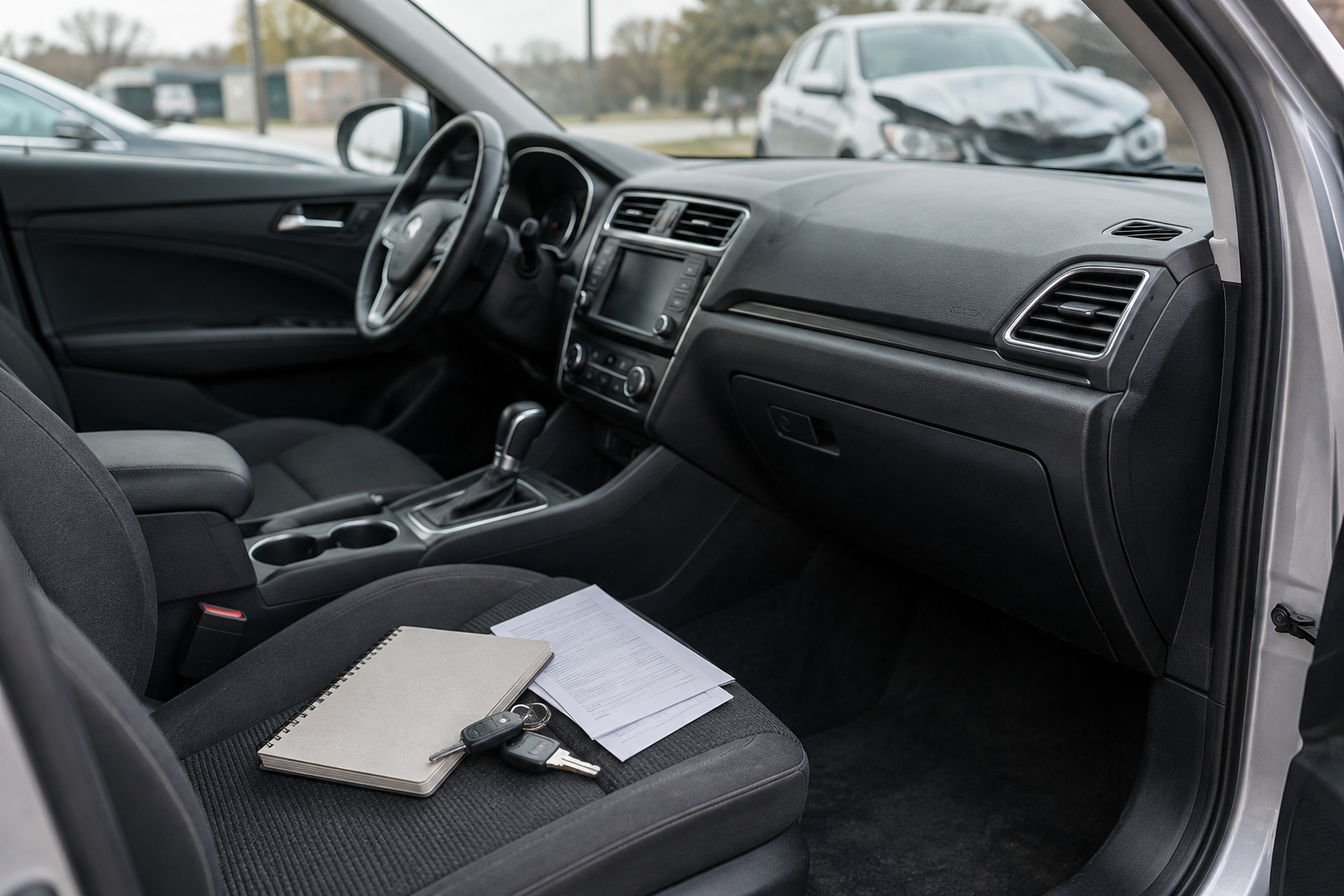
You might walk away from a collision thinking the worst part is the dented bumper, only to wake up sore, dizzy, or unable to concentrate. If you're searching for car accident injuries symptoms, the direct answer is this: pain, stiffness, headaches, dizziness, fatigue, and other changes may become noticeable hours or days after a crash. Symptoms alone cannot tell you what is wrong, so seek evaluation from a qualified medical provider promptly; severe or worsening symptoms may require emergency care.
Say you're stopped at a light and get rear-ended on the way to work. You exchange information, tell someone you feel okay, and finish your shift. By evening, turning your head hurts. That early statement does not automatically prevent an injury claim, but the timeline, medical records, and your explanation of what changed can matter.
Your health comes first. This guide explains how to recognize changes worth reporting, get useful medical documentation, handle treatment interruptions, and preserve evidence of your losses. It provides general educational information, not medical or legal advice. Laws and coverage rules vary by state; consult a qualified medical provider and a licensed attorney about your circumstances.
In This Guide
- In This Guide
- Why Can Car Accident Injury Symptoms Show Up Later?
- Which Symptoms After a Car Accident Need Urgent Attention?
- What Delayed Changes Should You Tell a Medical Provider About?
- How Soon Should You See a Medical Provider After a Crash?
- What Should You Say and Ask During Your Medical Visit?
- What If Symptoms Continue After Your First Examination?
- How Do Gaps in Treatment Affect a Car Accident Claim?
- How Do You Keep a Useful Car Accident Symptom Journal?
- What Evidence Connects Delayed Symptoms to the Crash?
- Who May Pay for Medical Care While Your Claim Is Pending?
- How Do You Document Compensation Beyond Medical Bills?
- How Should You Discuss Delayed Symptoms With an Insurer?
- What If You Had Pain or Medical Treatment Before the Accident?
- Which Deadlines and Fault Rules Could Affect Your Claim?
- What Should You Check Before Accepting an Injury Settlement?
- Request a Free Case Evaluation for Your Accident Questions
Why Can Car Accident Injury Symptoms Show Up Later?
A crash is distracting. You're watching traffic, checking passengers, finding your insurance card, and trying to figure out whether your car can move. Stress and the immediate demands of the scene can make discomfort less noticeable. Some symptoms also develop or become clearer over time rather than appearing all at once.
Later, ordinary movement may expose a problem you did not recognize while standing beside the road. Reaching for a cabinet, sitting through a commute, or looking down at your phone may bring on discomfort. That does not tell you the cause by itself, but it is useful information for a medical provider.
Delayed symptoms are not a diagnosis
There is no dependable rule that a particular symptom must begin within a certain number of hours to be related to a crash. There is also no rule that every ache afterward was caused by the collision. A provider considers your history, examination, activities, and any appropriate testing to evaluate what may be happening.
Avoid diagnosing yourself from a symptom list. Two people can describe similar discomfort and need different evaluations. Likewise, a vehicle that looks only lightly damaged does not establish whether its occupant needs medical attention.
Build an honest timeline immediately
Write down what you noticed at the scene, that evening, and the next morning. Include changes rather than trying to make the story sound more serious:
- You felt shaken but did not notice pain beside the car.
- Your shoulder began aching while preparing dinner.
- You woke during the night because changing position hurt.
- You contacted a clinic after symptoms continued the next day.
Use approximate times when you do not remember exactly. A clear, qualified estimate is better than false precision.
For a claim, this timeline helps explain why your first complaint came after the crash rather than during it. For your care, it helps the provider understand progression. The goal is the same in both settings: an accurate account of what happened, not a perfectly polished narrative.
Which Symptoms After a Car Accident Need Urgent Attention?
Some changes should not wait for an insurance call, a routine appointment, or a symptom journal entry. Seek emergency medical help for serious symptoms after a collision. If you cannot travel safely, call 911 or your local emergency number rather than driving yourself.
Examples of warning signs include:
- Trouble breathing, significant chest pain, or coughing up blood.
- Loss of consciousness, a seizure, marked confusion, or difficulty staying awake.
- A severe or worsening headache, especially with repeated vomiting.
- New weakness, loss of sensation, trouble speaking, or difficulty walking.
- Severe or increasing abdominal pain, swelling, or fainting.
- New loss of bladder or bowel control, particularly with weakness or numbness.
- Uncontrolled bleeding or rapidly worsening pain.
This is not a complete list, and the absence of these signs does not prove you are uninjured. If you are unsure how urgently you need care, contact a medical professional for guidance. Do not rely on an online article to rule out a serious problem.
Tell emergency staff about the collision
Explain that you were recently in a motor vehicle crash, even if you initially felt fine. Mention roughly when it happened, whether your head or body struck anything, and whether you remember the entire event. Share medications and relevant medical circumstances because they may influence how you are evaluated.
If someone else noticed a change, such as you repeating questions or seeming unusually unsteady, tell the clinician. You may not recognize every change yourself. A passenger or family member can provide observations without trying to diagnose you.
Leave documentation for later
Do not delay urgent care to photograph bruising, locate a claim number, or ask an adjuster for approval. Bring identifying information if it is readily available, but your immediate safety takes priority.
Afterward, keep discharge instructions and ask whom to contact if symptoms worsen. Those instructions may identify warning signs specific to your situation. Follow them rather than assuming that being discharged means no further attention could be necessary. An emergency visit addresses immediate needs; it does not necessarily answer every question about recovery or future care.
What Delayed Changes Should You Tell a Medical Provider About?
You do not need to know the name of an injury before asking for help. Describe the changes you notice and how they affect normal activity. Specific observations are more useful than either minimizing everything as “just soreness” or assigning yourself a diagnosis.
Pain, stiffness, and movement changes
Tell the provider where discomfort starts, whether it stays in one area, and what brings it on. Explain whether turning, lifting, sitting, standing, or walking feels different. Mention swelling, tenderness, or bruising that develops after the scene, even if you are unsure whether it matters.
A practical description might be: “I can turn my head to the left, but looking over my right shoulder hurts when I try to back out of a parking space.” That gives the provider more information than “my neck is bad.”
Headaches, dizziness, and thinking difficulties
Report new headaches, lightheadedness, balance changes, nausea, sensitivity to light or noise, and problems concentrating. Say whether these changes interfere with reading, screen work, conversations, or driving. A qualified provider can assess their significance and whether you need additional evaluation.
Do not assume that difficulty focusing is simply stress or lack of sleep. Those factors may be relevant, but a clinician should help sort out the possibilities after a collision.
Sleep, fatigue, and emotional changes
A crash can also leave you sleeping poorly, feeling unusually tired, or becoming distressed around traffic. Tell your provider if you repeatedly wake at night, avoid necessary travel, or struggle with ordinary responsibilities. Emotional changes deserve care, not embarrassment.
Document functional effects without labeling them yourself. “I had to ask someone else to drive me to work” is a concrete fact. A self-assigned medical label is not a substitute for an assessment.
Changes that emerge during your routine
Some symptoms become obvious only when you return to work or household tasks. Keep track of the activity, when the change occurred, and whether it settled or continued afterward. Do not deliberately repeat a painful movement to generate evidence. Share what happened during ordinary activity and ask about safe limits.
How Soon Should You See a Medical Provider After a Crash?
If you have new symptoms after a collision, arrange an evaluation promptly rather than waiting to see whether the insurance company accepts your claim. Seek emergency care for warning signs. Otherwise, a qualified provider can help determine the appropriate setting and timing based on your symptoms and circumstances.
There is no universal appointment deadline that makes every injury claim valid or invalid. Some insurance benefits do have specific reporting or initial-treatment requirements, however. Medical decisions should follow your needs, while coverage deadlines should be checked separately and quickly.
Choose care based on your condition
An emergency department, urgent care center, or primary care office serves different purposes. Describe your symptoms when arranging care so staff can advise whether that setting is appropriate. If you cannot get a timely appointment, ask about another suitable option rather than silently waiting through worsening symptoms.
Be clear if you are pregnant, take medications that may affect evaluation, or have a medical history relevant to the collision. Let a clinician decide what those circumstances mean for your care.
Why prompt evaluation helps your claim
A timely record can establish when you reported symptoms, what you described, and what the provider observed. It may also document work restrictions or a plan for follow-up. Without that record, an insurer may question whether the symptoms began later for an unrelated reason.
That does not mean an immediate appointment guarantees compensation. You still may need evidence of fault, causation, losses, and applicable coverage. Nor does delayed care automatically erase your options. It simply may create questions that need a truthful explanation.
If you have already waited
Do not assume it is now pointless to seek care. Tell the provider when the crash occurred, when symptoms began, and why you waited. Perhaps the discomfort initially seemed mild, transportation was unavailable, or the first appointment offered was later.
Do not change the dates to make them look better. If you are worried about how your timeline affects a claim, you can see if you may have a case through Free Case Evals, a free service connecting injured people with participating attorneys. Medical evaluation should not depend on whether you decide to pursue that option.
What Should You Say and Ask During Your Medical Visit?
A rushed appointment can leave you forgetting the symptom that bothered you most the night before. Bring a short list so the provider gets a complete picture. Your role is to explain what you experienced; the clinician's role is to evaluate it and recommend appropriate care.
Start with the crash date and a plain description of the event. Explain where you were seated, whether you wore a seat belt, whether airbags deployed, and what parts of your body contacted the interior. If you do not know something, say so. You do not need to estimate speed or forces you could not reliably judge.
Describe before and after
For each symptom, note:
- When you first noticed it.
- Whether it is improving, worsening, or changing.
- What activities make it more noticeable.
- Whether it affects sleep, work, driving, or personal care.
- Any similar symptoms or treatment before the crash.
- Medications you take and anything you have used since the collision.
Include seemingly minor concerns without demanding a particular diagnosis or test. The provider can decide which findings need attention. Leave compensation arguments for discussions with an attorney, not the examination room.
Ask questions you can act on
Before leaving, ask what symptoms require urgent attention, when follow-up should happen, and what to do if you cannot access the recommended care. Ask whether there are temporary limits on driving, lifting, screen use, or job tasks based on your situation.
If your work involves climbing, heavy lifting, long drives, or caring for others, explain those duties. A generic description such as “I work in a warehouse” may not communicate the actual physical demands.
Request written instructions when possible. If restrictions are medically appropriate, written documentation can help your employer understand what changes are needed and can support a later claim for related losses.
Review the visit record for factual mistakes
When the record becomes available, check dates, body areas, and basic history. If something is inaccurate, ask the office about its correction or addendum process. Do not ask a provider to rewrite an opinion or add symptoms you never reported. Accurate records are useful precisely because they reflect genuine care, not claim preparation.
What If Symptoms Continue After Your First Examination?
A first evaluation is a snapshot. Your symptoms may settle, continue, or change afterward. Follow the provider's instructions and keep recommended appointments, especially when the plan calls for reassessment. If new or worsening symptoms appear, contact a medical professional rather than waiting for the next scheduled visit.
A reassuring initial examination or test does not necessarily explain every continuing complaint. At the same time, persistent discomfort does not tell you which test or treatment you need. Let the treating provider determine whether further assessment is appropriate.
Make follow-up visits useful
Bring a concise update instead of starting the story over each time. Identify what improved, what stayed the same, and what now interferes with daily life. Mention any problems following the treatment plan, including side effects, scheduling obstacles, or difficulty completing recommended activities.
For example, you might explain that short walks are easier but sitting through a full work shift still causes discomfort. That distinction helps guide care and creates a more accurate record than simply reporting “no change.”
Coordinate when more than one provider is involved
If you receive care in several settings, keep a list of offices, visit dates, medications, and recommendations. Ask how records will be shared. Conflicting instructions or missing records can create confusion for you and for clinicians trying to understand your progress.
Keep referral paperwork and contact the referred office promptly. If the office cannot schedule you soon, notify the referring provider and ask what to do while you wait. Save appointment confirmations that show the delay was a scheduling issue rather than an unexplained decision to stop care.
Do not continue treatment merely to build a claim
Care should serve a medical purpose. Unnecessary appointments do not guarantee a stronger claim and may lead to disputes over whether charges were reasonable or related to the collision.
If you improve, say so. If the provider recommends ending or reducing treatment, ask what signs should bring you back and whether any restrictions remain. A documented discharge or change in the care plan is different from disappearing from treatment without explanation. Both your recovery and your records benefit from that clarity.
How Do Gaps in Treatment Affect a Car Accident Claim?
A treatment gap is a period when you are not receiving expected care or follow-up. Insurers may argue that a gap suggests your symptoms resolved, were not serious, or came from another event. They may also question whether some later expenses could have been avoided through reasonable care.
Those are arguments, not automatic conclusions. The meaning of a gap depends on the medical plan, your circumstances, and applicable law. A provider-directed break is not the same as missing several recommended visits without contacting the office.
Document the reason, not an excuse
Real life can interrupt treatment. Common barriers include unavailable appointments, lack of transportation, childcare responsibilities, work conflicts, and difficulty paying. If you face a barrier, tell the provider while it is happening and ask about medically appropriate alternatives.
Keep records that explain the interruption:
- Messages requesting an appointment or rescheduling a visit.
- Referral delays and waiting-list confirmations.
- Insurance denials or notices about coverage changes.
- Transportation cancellations.
- Written discussions about cost or payment options.
- Provider instructions to pause or change treatment.
You do not need to create a dramatic narrative. A simple record showing repeated attempts to schedule can explain a delay more clearly than a detailed statement written months afterward.
If you missed visits because you felt better
Be honest. Explain when symptoms improved and what caused you to seek care again. Tell your provider about any intervening activity, new accident, or work incident. An accurate account lets medical professionals evaluate the change and helps an attorney address questions about causation.
Do not attend unnecessary visits out of fear that any gap will ruin your claim. Instead, clarify the recommended follow-up plan before stopping care. Ask whether you should return only if symptoms recur or whether a scheduled reassessment is needed.
Ask about the legal significance of avoidable losses
Many states recognize a duty to take reasonable steps to limit damages, sometimes called mitigation. What is reasonable depends on the facts; it does not necessarily require unaffordable care or every proposed procedure. A licensed attorney can explain how that principle might apply. Do not make medical decisions based solely on an adjuster's opinion about what treatment should have occurred.
How Do You Keep a Useful Car Accident Symptom Journal?
A useful journal is brief, factual, and consistent. It preserves details you might otherwise forget, especially when symptoms fluctuate. It can help you communicate with providers and may help explain how the crash affected everyday life, but it does not replace medical records.
Choose a method you can maintain: a notebook, a calendar, or a secure electronic document. Date each entry. If you write about an earlier day, label it as a later recollection rather than making it appear contemporaneous.
Use a simple daily structure
Record the information that changed or mattered that day:
- Symptoms: What you felt and where.
- Timing: When it began, how long it lasted, and whether it returned.
- Activity: What you were doing when you noticed it.
- Function: What you could not do, did differently, or needed help with.
- Care: Appointments, provider contacts, and steps taken under medical guidance.
- Progress: Improvements as well as difficulties.
A factual entry might read: “Woke with shoulder discomfort. Could get dressed independently but needed help lifting the laundry basket. Called the clinic about continued symptoms and received a follow-up appointment.” It explains impact without speculation.
If your provider asks you to use a pain scale, follow their instructions and add context. A number alone does not explain whether you could complete a shift, sleep normally, or carry groceries.
Avoid overstating or copying entries
Do not write that you were unable to do anything if you actually worked part of the day. Describe the limits accurately: you took more breaks, avoided lifting, or left early. Record good days too. Recovery often includes variation, and honest variation is more credible than identical daily complaints.
Avoid legal conclusions, settlement demands, or guesses about permanent effects. Keep separate records for bills and insurer communications so the symptom journal stays focused.
Protect privacy without assuming secrecy
Store the journal securely and preserve original entries. Depending on the claim and legal process, relevant journal material may need to be disclosed. Ask an attorney about recordkeeping and disclosure obligations; do not assume a private note is automatically protected from review. Never delete or rewrite unfavorable entries to improve the appearance of a claim.
What Evidence Connects Delayed Symptoms to the Crash?
A claim usually needs more than proof that you were in a collision and later received care. You generally must connect the claimed injuries and losses to the event. This is often called causation. Medical history, timing, clinical findings, and other evidence may all contribute to that assessment.
No single document always answers the question. A police report may help establish what happened on the road without determining the medical cause of your symptoms. Medical bills show charges but do not, by themselves, prove why treatment was necessary.
Preserve crash evidence separately from health records
Keep the report number, driver and witness information, scene photographs, vehicle photographs, and relevant messages. If you have dashcam footage, preserve the original file and a backup rather than relying only on an edited clip.
Nearby businesses or vehicles may have recordings that are overwritten quickly. An attorney can assess whether to request preservation or pursue available evidence. Do not enter private property or confront people to obtain footage yourself.
Property damage records can provide context, including repair estimates and photographs taken before repairs. They should not be treated as a medical test. The visible condition of a bumper cannot establish the full effect of a collision on an occupant.
Keep the medical chain understandable
Organize your records chronologically, from the first contact through follow-up. Include referrals, examination notes, test reports, treatment plans, work restrictions, and discharge instructions. Keep billing documents too, but recognize that billing codes are not a substitute for clinical notes.
If you reported symptoms through a patient portal before an appointment, retain that message. It may help establish when you first sought guidance even if the appointment happened later.
Identify ordinary witnesses to functional changes
A coworker may have seen you leave a shift early. A family member may have helped with meals or school pickup. Preserve their names and the facts they personally observed, without coaching them or asking them to diagnose you.
An attorney may use those observations alongside medical evidence, not in place of it. If you need help understanding what is missing from your file, you can connect with a participating attorney for a free evaluation. Free Case Evals is not a law firm and does not assess medical causation itself.
Who May Pay for Medical Care While Your Claim Is Pending?
The insurer for the driver who caused the crash may not pay your providers as each bill arrives. Liability claims often involve disputes about fault, coverage, and the extent of losses before payment is negotiated. You may need another way to handle care during that process.
Available payment sources depend on the policies, the state, and the circumstances of the collision. Do not assume that opening a claim means every bill is covered or that you can ignore statements while a settlement is pending.
Coverage to check
Potential sources include:
- Personal injury protection, or PIP: Available or required under some state systems, it may cover qualifying medical expenses and certain other losses regardless of fault, subject to limits and requirements.
- Medical payments coverage, or MedPay: Optional or otherwise available depending on the state and policy, it may help pay eligible medical expenses.
- Health insurance: It may cover treatment under its plan rules, including network, authorization, deductible, and cost-sharing provisions.
- Workers' compensation: It may apply if the crash occurred in the course of employment, depending on the facts and state law.
- Uninsured or underinsured motorist coverage: It may provide a source of recovery when an at-fault driver's coverage is absent or insufficient, but it is not always a mechanism for paying immediate bills.
Ask each relevant insurer about notice requirements, forms, benefit limits, and coordination with other coverage. Give accurate information about how the injuries occurred.
Understand balances and repayment rights
A provider may offer a payment arrangement or agree to wait for payment under a lien or other agreement. Read the terms carefully. Interest, fees, personal responsibility, and repayment obligations can affect what you ultimately owe.
Health plans, benefit programs, or other payers may have reimbursement or subrogation rights against a later recovery. These rules can be complicated, and an attorney should review applicable obligations before settlement funds are distributed.
Keep itemized bills and explanations of benefits together so you can distinguish charges, insurance adjustments, payments, and remaining balances. For a fuller explanation, read Who Pays Your Medical Bills Before a Crash Claim Settles?. Early billing questions are easier to address than a pile of unexplained collection notices months later.
How Do You Document Compensation Beyond Medical Bills?
Medical expenses are only one possible part of an injury claim. Depending on state law and the evidence, compensation may also involve lost income, reduced earning ability, out-of-pocket expenses, and the effects of pain or other limitations on daily life. Availability and valuation vary; no symptom automatically creates a particular settlement amount.
Build a file for each type of loss rather than treating every receipt as interchangeable. The stronger question is not simply “Did I spend money?” but “What connects this loss to the crash and makes it recoverable?”
Lost wages and employment changes
Save pay stubs, time records, schedules, employer correspondence, and medical restrictions. Identify the specific shifts or hours missed and whether you used paid leave. Paid leave may raise distinct recovery questions, so preserve those records even if your paycheck did not immediately shrink.
If you worked shorter shifts or moved temporarily to lower-paying duties, document the before-and-after arrangement. An employer's factual confirmation may help establish the change. Avoid asking an employer to speculate about your medical condition.
Self-employed workers may need invoices, tax records, contracts, calendars, and proof of canceled or declined work. Lost revenue is not always the same as lost income, so discuss the appropriate calculation with an attorney and, when needed, a financial professional.
Practical expenses and household help
Keep receipts for transportation to appointments, parking, medically recommended supplies, and paid assistance you needed because of documented limitations. Record the date, purpose, and connection to your care or recovery.
If a friend or relative provides unpaid help, track the tasks and time without assigning an invented price. Whether those services support compensation depends on local law and the evidence. Their observations may also show how your routine changed.
Losses without a receipt
Pain, disrupted sleep, and reduced ability to participate in ordinary activities can matter even when they do not produce an invoice. Describe concrete effects: missing a child's school event because travel was intolerable, giving up a regular walk, or needing help bathing.
Future losses usually require more than your own prediction. Medical opinions, employment information, and other evidence may be needed. What Determines Your Car Accident Claim's Value? explains the broader factors without treating a diagnosis or symptom score as a settlement formula.
How Should You Discuss Delayed Symptoms With an Insurer?
Keep communications factual and distinguish what you know from what is still being evaluated. You can report that symptoms developed after the collision without naming an injury you have not been diagnosed with. You can also explain that treatment is ongoing and that you do not yet know the full extent of your losses.
An adjuster may ask why you declined an ambulance, told the other driver you were okay, or waited for an appointment. Answer the actual question honestly. If you did not notice pain at the scene, say that, then explain when you did notice it.
Avoid guesses and absolute statements
Do not speculate about vehicle speed, recovery time, or whether you will need future care. Avoid saying you are “completely fine” just to be polite when you are still having symptoms. Likewise, do not describe every problem as permanent when no provider has assessed that question.
If you cannot remember a detail, say you do not recall. Later corrections can become a distraction, especially when an initial guess sounded certain. Keep a communication log with the date, person's name, topic, and any requested follow-up.
Understand whose insurer is asking
Your own policy may impose notice and cooperation duties. The other driver's insurer has a different relationship with you. Requests for recorded statements, examinations, authorizations, or documents should be reviewed in that context rather than handled under a blanket rule to cooperate with everything or refuse everything.
Before signing a broad medical authorization, understand what records it permits the insurer to obtain. Relevant prior records may legitimately matter, but the appropriate scope depends on the claim. A licensed attorney can review the request and explain your obligations.
Preserve communications instead of arguing
If the adjuster says a delay means you could not have been hurt, write down the statement and ask for any coverage or claim decision in writing. Provide accurate supporting information rather than escalating into a debate about medicine.
For more practical guidance, see Talking to an Insurance Adjuster After a Crash. You do not need to settle the medical meaning of your symptoms during an unexpected phone call. Ask for time to review requests and obtain appropriate advice while remaining mindful of deadlines and policy duties.
What If You Had Pain or Medical Treatment Before the Accident?
A previous health issue does not automatically rule out compensation for harm caused by a new crash. In many jurisdictions, a defendant may be responsible for aggravating an existing condition, but generally not for losses the collision did not cause. Separating the two can require careful medical and factual evidence.
Be candid with your providers and your attorney about earlier symptoms, accidents, treatment, and work restrictions. Concealing a relevant history can undermine credibility and make it harder to understand what actually changed.
Establish your pre-crash baseline
Think in terms of function as well as symptoms. Before the collision, were you working full shifts, sleeping normally, exercising, or managing household tasks without help? Were you receiving regular care, or had an earlier problem stopped interfering with your life?
Useful records may include prior medical notes, discharge summaries, employment records, and ordinary activity documentation. You do not need to claim you were perfectly healthy. The question is what was true before this event and what changed afterward.
For example, occasional back discomfort before a crash is not necessarily equivalent to new difficulty sitting through a workday afterward. That difference should be described accurately and evaluated by a provider rather than assumed to establish a claim on its own.
Explain overlapping symptoms clearly
Tell the clinician whether the location, intensity, frequency, or effect of the symptom changed. Mention treatments that previously helped and whether your care needs are different now. Do not demand that the provider attribute everything to the collision; ask for an accurate assessment.
If a later event worsens symptoms again, disclose it too. A new fall, work incident, or second collision may affect medical decisions and allocation of responsibility. Leaving it out can make otherwise legitimate records appear unreliable.
Expect a closer records review
An insurer may request earlier records to compare your history with current complaints. The existence of a prior issue does not settle the causation question either way. An attorney can help evaluate the relevance and scope of requests and whether additional medical explanation is needed.
The most useful approach is a documented comparison, not an argument that your entire medical history is irrelevant. Accurate distinctions can help preserve a claim for the additional harm you actually experienced.
Which Deadlines and Fault Rules Could Affect Your Claim?
Medical recovery and legal deadlines run on different clocks. You may still be receiving care when an insurance notice deadline, benefit application requirement, or lawsuit deadline approaches. Do not assume a claim stays open indefinitely because your symptoms remain unresolved.
A statute of limitations generally sets the time to file a lawsuit. The applicable period, when it begins, and any exceptions depend on the state and claim type. Delayed recognition of symptoms does not automatically restart or extend that period.
Identify every potentially relevant deadline
Ask a licensed attorney about:
- The deadline for a lawsuit against the responsible parties.
- Special notice rules involving government vehicles or public entities.
- Policy deadlines for reporting the collision or seeking benefits.
- Requirements connected to PIP or other first-party coverage.
- Rules affecting minors or people under particular legal disabilities.
- Deadlines for uninsured or underinsured motorist claims.
Do not assume settlement talks pause a lawsuit deadline. A claim number or an adjuster's request for more records may not protect your right to sue. If time may be short, say so when requesting legal help.
Fault can affect recovery even with clear injuries
Proving an injury does not necessarily prove another driver is legally responsible. Crash photographs, witness accounts, road conditions, and traffic evidence may be needed to establish fault separately from the medical evidence.
Under comparative negligence systems, a claimant's share of fault can reduce recovery, and some states bar recovery at certain thresholds. A small number of jurisdictions use contributory negligence rules that may bar recovery when the claimant shares fault, subject to applicable exceptions. No-fault systems also have their own benefit rules and may restrict when certain claims can be pursued outside that system.
More than one party may be involved
An employer, vehicle owner, commercial operator, or another party may have potential responsibility under the facts and state law. Their involvement is not automatic simply because a business name appears on a vehicle.
Preserve details about vehicle ownership, work activity, and all involved drivers. An attorney can investigate potential responsibility and available coverage. Identifying those issues early matters because different defendants, policies, and legal theories may bring different requirements. A delayed symptom should not become a reason to delay investigating the rest of the claim.
What Should You Check Before Accepting an Injury Settlement?
An early offer may arrive before you understand whether symptoms will resolve quickly or require continued care. A settlement release often ends your ability to seek additional compensation from the released parties for the covered event, even if unexpected problems appear later. Read the actual documents and obtain legal guidance before signing.
This does not mean every claimant must wait until all care ends. It means the decision should account for what is known, what remains uncertain, and what rights the agreement gives up.
Review the medical picture and the financial picture
Before deciding, gather answers to practical questions:
- Have your providers explained the current care plan and expected follow-up?
- Are additional evaluations or referrals pending?
- Are work restrictions still in place?
- Have all providers submitted their bills?
- Are there unpaid balances, liens, or reimbursement claims?
- Have you documented missed income and other supported losses?
- Does the offer resolve only property damage, only injury claims, or both?
- Could signing affect another policy or claim, including underinsured motorist benefits?
Future care estimates should come from appropriate evidence, not a guess made to complete a demand letter. Likewise, the amount offered is not the same as the amount you would personally receive after valid obligations and any agreed legal fees or costs.
Check the scope of the release
A document may release people or entities beyond the adjuster's insured. It may also contain terms about confidentiality, indemnification, or responsibility for medical bills. These provisions can create obligations you should understand before accepting payment.
Be careful with documents or payments that appear to resolve only one part of the claim. The wording, not your assumption, determines what is being settled. Ask an attorney to review anything unclear.
Organize a decision packet
Put the offer, proposed release, treatment summary, bills, payment records, wage proof, and remaining questions in one folder. That gives an attorney a practical starting point and reduces the chance that an overlooked balance distorts your decision.
Do not let pressure to replace a vehicle or cover a missed paycheck substitute for understanding an injury release. Ask what options exist for immediate expenses while you evaluate the offer. No one can promise a better outcome, but you should understand the tradeoff before making a final choice.
Request a Free Case Evaluation for Your Accident Questions
If symptoms appeared after you left the crash scene, you may be unsure whether the delay, a missed appointment, or an earlier medical issue affects your options. A licensed attorney can review those facts along with available insurance, evidence, and state-specific deadlines.
You can request a free case evaluation through Free Case Evals. Free Case Evals is not a law firm. It is a free service that connects people injured in motor vehicle accidents with participating attorneys for a free case evaluation. Requesting an evaluation does not guarantee representation, compensation, or any particular outcome.
You do not need a perfect file before reaching out. Have the crash date and location, insurance information, current symptoms, treatment dates, and any settlement offer available if possible. Explain missing records or gaps honestly, and flag any deadline or document you have been asked to sign.
An attorney can explain potential next steps; a qualified medical provider should guide your care. If you have severe, new, or worsening symptoms, seek appropriate medical attention rather than waiting for the evaluation or an insurance response.
Frequently Asked Questions
Can I pursue an injury claim if the police report says no injuries?
A report may reflect only what was known at the scene, so that notation does not automatically prevent a later injury claim. Medical records, the symptom timeline, and other evidence may help establish what developed afterward. Ask a licensed attorney whether a factual supplement or other documentation would be appropriate.
What if I did not hit my head during the crash?
You should still report new headaches, dizziness, concentration difficulties, or other changes to a qualified medical provider. Whether you struck your head is relevant history, but it does not by itself determine whether evaluation is needed. Seek emergency care for severe or worsening warning signs.
Does declining an ambulance mean insurance will deny my injuries?
Declining transport does not automatically decide an injury claim. An insurer may ask about it, so explain honestly what you felt and understood at the time. Later medical documentation and the overall evidence will also matter.
Can a telehealth visit document symptoms after a collision?
A telehealth visit can create a record of symptoms you report and guidance you receive. It may not be sufficient to evaluate your particular symptoms, and the provider may direct you to an in-person or emergency examination. Choose care based on medical needs rather than documentation alone.
What if my child seems different after a car accident?
Contact a qualified pediatric medical provider about changes in behavior, sleep, movement, feeding, or other concerns after a crash. Children may have difficulty describing symptoms, so share your observations without trying to diagnose them. Serious or worsening symptoms require urgent medical attention.
Should I post recovery updates on social media?
Posts, photographs, and comments may be reviewed in a claim and may not convey the full context of your activities. Avoid exaggeration or speculation online, just as you would in other communications. Do not delete potentially relevant existing material; ask an attorney about preservation obligations.
Can I change medical providers while an accident claim is open?
You can seek appropriate care from a different provider, subject to insurance and other applicable rules. Arrange record transfers and explain why you changed so your care remains coordinated. Check network, referral, and authorization requirements before assuming the new visits will be covered.
What if my symptoms improve before an attorney reviews my case?
Improvement does not automatically erase documented medical expenses, missed income, or other past losses. Report your progress accurately and preserve the records showing what happened during recovery. Whether compensation is available still depends on liability, causation, coverage, and state law.
Does a free case evaluation mean I have hired an attorney?
A free case evaluation does not by itself mean an attorney has agreed to represent you. Representation and any fee arrangement should be confirmed directly with the participating attorney. Free Case Evals is a connection service, not a law firm.
This article is for general informational purposes only and is not legal or medical advice. Laws vary by state. Speak with a licensed attorney about your specific situation.
Hurt in a car accident?
Answer a few quick questions to see if you may qualify for a free case evaluation. No cost, no obligation.
Start My Free Case Evaluation