
Your Uber Accident Claim: Which Insurance Pays and How to Protect It
Free Case Evals · October 5, 2026
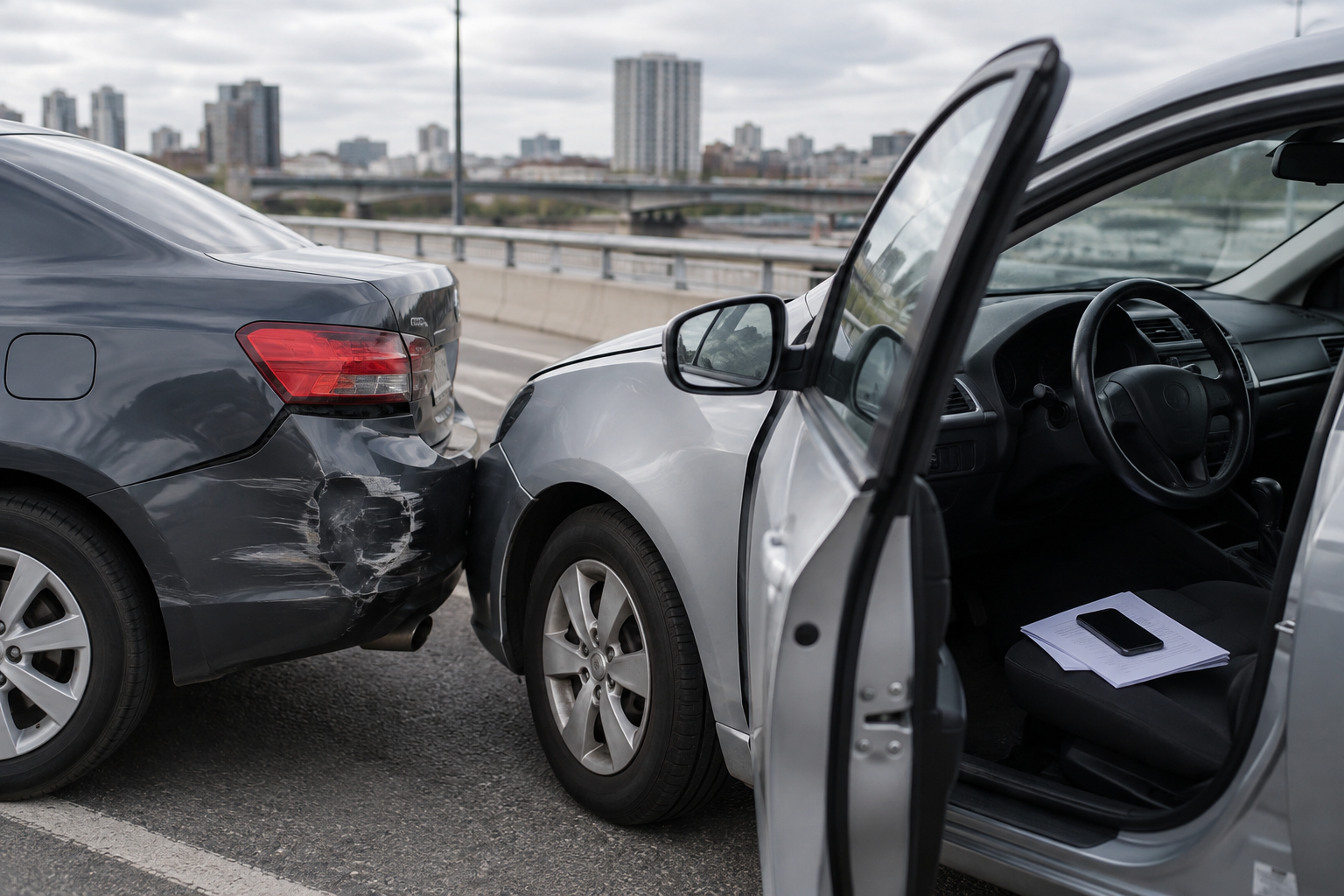
An uber accident claim usually involves identifying who caused the crash, confirming what the rideshare driver was doing in the app, and seeking payment under the policies that apply. Passengers, rideshare drivers, and people in other vehicles may have different routes to compensation. The driver's personal insurance, platform-arranged insurance, another motorist's policy, and your own benefits may each play a role—but they do not automatically cover the same losses.
That is a lot to sort out when you are arranging transportation, missing work, or waiting for medical bills. Start with your safety and care, preserve the trip information, and report the crash without guessing about fault or coverage. This guide explains the general process for Uber and Lyft crashes in the United States; it is educational information, not legal advice. Insurance terms and laws vary by state, so speak with a licensed attorney about your situation.
In This Guide
- Who Can Pursue an Uber Accident Claim?
- How Does App Status Change Uber and Lyft Insurance Coverage?
- Which Insurance Policy Pays for Which Losses?
- What Should Passengers Do After a Rideshare Crash?
- What Should Uber and Lyft Drivers Do After an Accident?
- What If an Uber or Lyft Driver Hits Your Vehicle?
- What Evidence Helps Prove a Rideshare Accident Claim?
- How Do You Establish Fault When Several People Are Involved?
- How Should You Report the Crash and Handle Adjuster Calls?
- How Can You Manage Medical Bills While the Claim Is Open?
- What Compensation Can an Uber Accident Claim Include?
- How Do You Deal With Multiple Insurance Companies?
- What If Coverage Is Denied or There Is Not Enough Insurance?
- What Deadlines Could Affect Your Rideshare Accident Claim?
- What Should You Review Before Accepting a Settlement?
- Request a Free Evaluation of Your Uber Accident Claim
Who Can Pursue an Uber Accident Claim?
You do not have to be the person who ordered the ride to have a potential claim. The starting question is whether someone else's conduct caused your injuries or other legally recoverable losses. Your location in the crash helps determine which insurance benefits may be available, but it does not answer every question about responsibility.
If you were a passenger
You may have a claim against your rideshare driver, another driver, or both, depending on what happened. If your Uber driver runs a stop sign, the driver's liability coverage may be relevant. If another motorist rear-ends your Lyft at a red light, that motorist's coverage may be the first liability policy investigated.
Passengers generally do not control either vehicle. Still, insurers need evidence showing how the collision happened and which actions caused your losses. Being a passenger does not eliminate the need to document the crash, your care, and your expenses.
If you were driving for a rideshare platform
Your options may include a claim against an at-fault motorist, benefits under applicable first-party coverage, and possibly separate coverage you purchased for rideshare work. Platform liability insurance generally protects against covered claims by other people; it is not automatically a source of payment for your own injuries or vehicle damage.
If you were outside the rideshare vehicle
Drivers and passengers in other cars, pedestrians, cyclists, and others may pursue claims when a rideshare driver's negligence causes harm. You do not need an Uber or Lyft account to seek compensation. You do, however, need a reliable way to identify the driver, vehicle, and potentially applicable insurer.
Create a short description of your role: passenger, working driver, off-duty driver, or person in another vehicle. Add who booked the ride, whose vehicle was involved, and whether you know the app status. These simple facts help an insurer or attorney separate the possible claims without relying on assumptions.
The platform's involvement also does not automatically mean the company itself is legally responsible. Insurance coverage for a driver and a direct legal claim against a platform are different questions. A licensed attorney can evaluate both if the facts support doing so.
How Does App Status Change Uber and Lyft Insurance Coverage?
Rideshare coverage often follows several stages of app activity. People commonly call these coverage periods, but policy language, state requirements, vehicle arrangements, and the type of service can change the details. The policy in effect on the accident date matters more than a general description found online.
| Driver's status | Coverage that may be relevant | What to verify |
|---|---|---|
| App off and no rideshare trip underway | Personal auto insurance | Whether ordinary personal use was covered |
| App on, waiting for a request | Platform-arranged liability coverage and any applicable personal or rideshare coverage | Which policy responds first, exclusions, and available limits |
| Ride accepted, traveling to pickup | Platform-arranged commercial coverage generally applies subject to its terms | Acceptance time, trip record, and the specific coverage types provided |
| Passenger being transported | Platform-arranged commercial coverage generally continues subject to its terms | Trip start and end times, covered persons, and applicable benefits |
App off: personal coverage usually takes the lead
Say a driver finishes work, turns off the app, and drives to the grocery store. A crash during that personal errand generally points toward personal auto insurance rather than a platform's rideshare policy. A sticker on the windshield does not make every trip a covered rideshare trip.
App on, but no accepted ride: a common coverage dispute
When the driver is available for requests, personal policies may exclude business-related driving unless an endorsement applies. Platform-arranged liability protection may be available during this waiting period, but its terms can differ significantly from accepted-trip coverage. Do not assume the same benefits protect the driver and everyone else involved.
Accepted ride and passenger trip: preserve the timestamps
Coverage generally changes once the driver accepts a ride request, before the passenger necessarily gets into the car. If a crash happens on the way to pickup, the absence of a passenger does not by itself establish that only personal coverage applies.
Likewise, a trip cancellation, early ending, or disputed drop-off time can affect the analysis. Save your own records immediately and ask that the relevant electronic trip data be preserved. A driver using multiple apps creates another factual issue: each platform's status and the accepted assignment may need separate confirmation.
Which Insurance Policy Pays for Which Losses?
Think of insurance in two categories: coverage for harm an insured person causes to others, and coverage that may pay the insured person's own losses. Several policies can be involved without all of them paying the same bill. Knowing the category helps you ask the right question instead of accepting a vague statement that the crash is covered.
Liability insurance
Bodily injury liability coverage may pay covered injury-related damages when its insured is legally responsible. Property damage liability coverage addresses covered damage to someone else's property. Both remain subject to policy limits, exclusions, and applicable law.
An insurer can confirm that a policy exists while still investigating fault or disputing the amount of damages. Ask whether the company has accepted coverage, accepted responsibility, or simply opened a claim. Those are different milestones.
PIP and medical payments coverage
Personal injury protection, often called PIP, may provide benefits without requiring you to prove the other driver was at fault. Depending on state law and the policy, it may address medical expenses and certain other losses. Medical payments coverage, or MedPay, typically focuses on eligible medical expenses.
Which policy supplies these benefits can depend on your state, your relationship to the vehicle, and whether you have your own auto coverage. No-fault rules do not mean no one caused the accident or that every injury claim is barred.
Uninsured and underinsured motorist coverage
Uninsured motorist coverage may help with covered losses caused by a driver without applicable insurance. Underinsured motorist coverage may apply when an at-fault driver's available insurance is insufficient, subject to policy requirements and state rules. Availability through a rideshare policy is not uniform; check the actual policy rather than assuming every trip includes it.
Collision and comprehensive coverage
Collision coverage may address covered crash damage to the insured vehicle regardless of fault, usually subject to a deductible. Platform-provided physical damage coverage may be contingent on the driver maintaining certain personal coverage. Comprehensive coverage generally concerns covered non-collision losses, not an ordinary collision with another car.
Ask each adjuster to identify the coverage being discussed by name. A denial of collision benefits does not necessarily resolve a bodily injury liability claim. Similarly, a liability payment to another motorist does not establish that the rideshare driver's own car qualifies for repair coverage.
What Should Passengers Do After a Rideshare Crash?
As a passenger, you may be dropped into an insurance dispute you did nothing to create. Your immediate job is not to decide which carrier should pay. It is to protect your safety, obtain appropriate care, and keep the information that ties you to the trip.
Move to a safer location if you can do so safely, contact emergency services when needed, and follow lawful instructions at the scene. See a qualified medical provider for concerns after the collision. Explain when the crash happened and describe your symptoms accurately, without trying to diagnose yourself.
Save the trip before details become harder to retrieve
Keep screenshots or downloads showing:
- The trip date, pickup point, and intended destination.
- The driver's name and vehicle information displayed in the app.
- Your receipt, trip identifier, and relevant timestamps.
- Messages about pickup, cancellation, route changes, or the crash.
- Any support report and confirmation number.
If a friend or family member ordered the ride, ask them to preserve the booking information and identify you as an occupant when reporting the event. Your presence in the vehicle may also be documented by witnesses, the police report, or communications sent around the time of the crash.
Collect information beyond the app
When it is safe, obtain the other driver's contact and insurance information. Photograph the vehicles, plates, roadway, and visible damage. Ask witnesses for their contact details; the rideshare receipt will not explain who entered the intersection first.
Report the collision through the platform's available safety or incident process, but do not assume that report opens every necessary insurance claim. Request the assigned carrier's name, claim number, and contact information.
If the ride ends abruptly, keep reasonable replacement transportation receipts. Preserve damaged personal items rather than throwing them away before they can be documented. A broken phone, damaged glasses, or ruined child safety seat can be easy to overlook while you are focused on getting home.
You also do not have to choose between the drivers based on what they say at the roadside. Tell each insurer what you observed, including what you could not see. A neutral, accurate account is more useful than adopting one driver's explanation before the evidence is available.
What Should Uber and Lyft Drivers Do After an Accident?
If you were driving for Uber or Lyft, a crash may interrupt both your transportation and your income. You also have policy obligations that differ from a passenger's. Report the event as required, preserve the work-related records, and do not assume the platform will notify your personal insurer for you.
Document your exact work status
As soon as it is safe, preserve the app information showing whether you were offline, waiting, heading to pickup, or transporting a passenger. Save the accepted request, route information, trip identifier, and any cancellation notice. If more than one app was active, record each app's status honestly.
Avoid recreating the timeline from memory when electronic records exist. Write down what you remember separately, noting where a time is approximate. Turning an estimate into a definite statement can create an unnecessary credibility problem later.
Locate every potentially relevant policy
Gather your personal auto declarations page, any rideshare endorsement, platform insurance information, and rental or fleet agreements if applicable. If you bought occupational accident or other work-related protection, locate that policy too. Such coverage is not necessarily equivalent to workers' compensation, and eligibility depends on its terms and applicable law.
Ask specific questions:
- Does the policy cover this stage of app use?
- Is physical damage coverage conditional on my personal insurance?
- What deductible applies to a covered vehicle claim?
- Are towing, storage, rental transportation, or loss of use included?
- Are any benefits available for my own injuries?
Preserve proof of interrupted earnings
Download earnings statements, work calendars, and relevant tax or business records. Gross app receipts are not always the same as recoverable lost income. Insurers may examine expenses you did not incur while you were unable to drive, along with evidence of your usual schedule.
Keep platform notices restricting your access after the crash. Record whether you could not work because of medical restrictions, a damaged vehicle, or another documented reason. These distinctions can affect how an income claim is evaluated.
If the personal carrier and platform carrier each point to the other, ask for their positions in writing. You can request a review of your accident circumstances through Free Case Evals, a service that connects injured people with participating attorneys. It is not a law firm.
What If an Uber or Lyft Driver Hits Your Vehicle?
Suppose you are stopped at a light on your way to work and a rideshare driver rear-ends you. You may never have opened a rideshare app, yet the driver's app activity could determine which liability policy responds. Start with an ordinary crash exchange, then preserve the additional facts that suggest rideshare use.
Obtain the driver's name, license information where appropriate, insurance information, vehicle plate, and contact details. If the driver says they were working, note the statement accurately. Ask which platform was involved and whether a trip had been accepted, but do not turn the roadside exchange into an argument.
Do not rely on a windshield emblem
A branded decal can be a useful lead, not proof of active coverage. The driver might be off duty, using another platform, or completing a different type of service. A passenger in the back seat may be a customer, friend, or family member.
Photographs, witness accounts, and the driver's own report can help establish context. The actual app records may still be needed. You generally will not have direct access to another person's account, so an attorney may need to request preservation and pursue records through the available legal process.
Use your own benefits when appropriate
Your collision coverage may provide a repair route while liability insurers investigate, subject to its terms and deductible. Your own PIP, MedPay, or other coverage may also require prompt notice. Using available first-party coverage does not automatically mean you have accepted fault.
Ask how a deductible recovery will be handled if your insurer later collects from a responsible party. Recovery is not guaranteed, and timing can differ from the repair process.
If you were a pedestrian or cyclist, gather the same driver and platform information where possible. Preserve damaged clothing, a bicycle, helmet, or other equipment for documentation and inspection. Ask before discarding items that might show the force or direction of the impact.
For every outside claimant, the practical goal is the same: identify both the responsible conduct and the coverage attached to the vehicle's actual use. One without the other can leave the claim stalled, even when the collision itself seems straightforward.
What Evidence Helps Prove a Rideshare Accident Claim?
A strong file tells three connected stories: how the crash happened, why a particular policy may apply, and what losses followed. You do not need to collect everything at once. Organize what you can, then identify records that someone else controls.
Scene and vehicle evidence
Save photographs of vehicle positions, damage on every side, lane markings, traffic controls, road conditions, and relevant obstructions. Wide views often explain something a close-up of a dent cannot. Keep the original files rather than only edited or compressed copies.
Write down witness names and contact details. Obtain the police report number and learn how to request the report. Review it for factual errors, while remembering that an officer's preliminary assessment does not necessarily settle civil liability.
Digital evidence that may disappear
Rideshare disputes can involve trip acceptance times, GPS records, driver communications, and cancellation data. Dashcam recordings, business surveillance, and residential cameras may add another view. Some systems overwrite footage quickly, so prompt preservation efforts can matter.
Ask an attorney about preservation requests when key records are held by a platform, business, or opposing party. A preservation request is not the same as receiving the records, and it does not guarantee access. It helps address the risk that relevant information will be lost while legal access is pursued.
Evidence of your losses
Create folders for:
- Medical records, bills, and payment explanations.
- Employer statements, missed shifts, and income records.
- Vehicle estimates, towing bills, and storage notices.
- Receipts for replacement travel and other claimed expenses.
- Correspondence from insurers and the rideshare platform.
Maintain a brief, factual log of how the injuries affect ordinary activities. Record dates, missed tasks, and help you needed, rather than using dramatic language. Avoid exaggeration and distinguish something you could not do from something you chose not to do.
Do not delete relevant messages, photographs, or social media posts to improve the appearance of your claim. Preserve existing material and avoid public speculation about fault, injuries, or settlement. Context can be lost when an insurer sees only a fragment of a conversation or image.
Keep a backup of the file somewhere separate from your phone. A lost or damaged device should not erase the only copy of your receipt, photographs, and claim communications.
How Do You Establish Fault When Several People Are Involved?
App status determines potential coverage; it does not establish negligence. A rideshare driver can be fully insured for a trip and still not be responsible for causing the collision. Conversely, a driver can cause a crash while the applicable coverage remains disputed.
Fault usually involves showing that someone failed to use legally required care and that this failure caused harm. Useful evidence might show an unsafe lane change, failure to yield, excessive speed for conditions, or distraction. A traffic citation can be relevant, but it is not always the final word.
Separate the impacts in a multi-vehicle crash
Imagine your Uber is struck from behind and pushed into the car ahead. The front-end damage alone does not establish that your driver followed too closely. The sequence of impacts, witness accounts, vehicle positions, and available recordings help explain what happened.
Write down whether you felt one impact or several and what you actually saw. If you were looking at your phone, say so rather than filling in missing details. Investigators can compare your limited observations with other evidence.
Understand shared-fault rules
States use different systems for handling a claimant's own share of responsibility. Comparative negligence rules may reduce compensation based on an assigned share of fault, sometimes with a threshold that bars recovery. Contributory negligence rules in some jurisdictions can be more restrictive.
Do not assume an insurer's proposed allocation is correct or legally decisive. Ask which evidence supports it. For more background, read Partly at Fault in a Car Accident? Know Your Options.
Look beyond the most obvious driver when facts justify it
A vehicle owner, another road user, or a party responsible for a dangerous condition may deserve investigation in some cases. These claims require a supported legal basis; they should not be added merely because one driver's insurance is limited. Claims involving public entities may also have special procedural requirements.
For a passenger, competing blame between drivers can slow negotiations without eliminating the possibility of compensation. Preserve evidence against all potentially responsible parties until the facts become clearer. Releasing one party too early can complicate the remaining claims, especially when insurers disagree about who caused which part of the harm.
How Should You Report the Crash and Handle Adjuster Calls?
Reporting a crash is not the same as proving the entire claim in your first phone call. Give accurate basic facts, ask what information is needed, and keep a record of the exchange. You can explain that treatment and investigation are ongoing when that is true.
Notify the platform through its designated incident process and provide timely notice to insurers whose policies may apply. Policy duties differ, so review your documents rather than assuming another person's report protects you. Get a separate claim number for each carrier handling the event.
Before you speak with an adjuster
Ask for the person's name, employer, contact information, and the insured or policy they represent. Confirm whether the call concerns liability, your own benefits, vehicle damage, or another issue. An adjuster hired by a platform's insurer does not represent you personally.
Keep your trip record, scene notes, and calendar nearby. You can provide facts without estimating speed, accepting blame, or predicting when you will recover. If you do not know an answer, say that you do not know.
Treat statements and authorizations carefully
Recorded-statement obligations can differ between your own insurer and another party's carrier. Ask whether a statement is required under an applicable policy and whether you may arrange a reasonable time to review the request. A licensed attorney can help you understand your obligations before a detailed interview.
Likewise, read medical authorizations before signing. Insurers may reasonably request records relevant to the claim, but an authorization can reach much further than expected. Ask what records are sought, for what dates, and why they are relevant.
Confirm important conversations in writing
After a meaningful call, send a short message confirming what was discussed, what documents you will provide, and any next step or promised response. Save the original request and your reply. A written trail helps prevent disputes about whether an adjuster asked for a document or whether you already supplied it.
For a more detailed discussion of these conversations, see Talking to an Insurance Adjuster After a Crash. Stay cooperative, but do not mistake a friendly conversation for an explanation of all your rights. The carrier is evaluating its own obligations, not serving as your independent adviser.
How Can You Manage Medical Bills While the Claim Is Open?
A liability claim may take time, while providers bill on their own schedule. Do not assume the at-fault driver's insurer will pay each bill as it arrives. Liability carriers often address injury damages through a later settlement rather than providing ongoing direct payment for every appointment.
See a qualified medical provider for evaluation and follow that provider's guidance. Tell the billing office that the care relates to a motor vehicle collision and provide relevant insurance information. Ask which benefits should be billed first under the rules that apply to you.
Identify possible payment sources early
Depending on your circumstances, potential sources include PIP, MedPay, health insurance, and other applicable benefits. The order of payment may be controlled by state law or policy terms. Give each payer accurate information so billing staff do not have to guess whether auto coverage or health coverage is primary.
Ask about submission requirements and any benefit deadlines. Keep copies of forms and proof that they were sent. Opening a liability claim does not automatically complete a separate application for no-fault or medical payments benefits.
Track bills separately from payments
Maintain a ledger with the provider, service date, amount billed, insurance adjustment, payment, and remaining balance. Save explanations of benefits as well as provider statements. An explanation of benefits is not necessarily a bill, and a billed charge is not necessarily the balance you owe.
If a statement appears wrong, ask for an itemized bill and written clarification. If you cannot pay, speak with the provider about available arrangements rather than simply ignoring notices. Keep records of any agreement.
Understand repayment interests
Health plans, government benefit programs, and some providers may have reimbursement or lien rights against a later recovery. These rights vary and can affect what remains after settlement. Ask who is asserting repayment, what legal or contractual basis they claim, and whether the amount has been verified.
Some providers may offer treatment under a lien or another deferred-payment agreement. Understand the charges, personal responsibility, and repayment terms before agreeing; deferred billing is not free care.
The related guide Who Pays Your Medical Bills Before a Crash Claim Settles? explains common payment routes. Bring unresolved bills and benefit letters to your attorney consultation so the discussion includes both compensation and the obligations attached to it.
What Compensation Can an Uber Accident Claim Include?
A claim should reflect documented losses caused by the crash, not a number chosen from an online calculator. The categories available depend on state law, the evidence, and the particular claim. Insurance limits also affect what a carrier may be obligated to pay.
Financial losses
Potential categories include eligible medical expenses, lost earnings, reduced future earning capacity, property damage, and reasonable related out-of-pocket expenses. Keep proof connecting each expense to the collision. A receipt shows what you paid; supporting context explains why the expense belongs in the claim.
For missed work, obtain records showing dates absent, your usual compensation, and any restrictions relevant to your job. If you used paid leave, keep the leave records as well. Whether and how that loss is recoverable depends on applicable law and the facts.
Self-employed people may need invoices, canceled assignments, business records, and historical earnings. A missed opportunity is harder to prove when it is only an expectation rather than a documented job. Separate business revenue from the expenses associated with earning it.
Nonfinancial harm
Some claims may include pain, loss of enjoyment of life, and other legally recognized effects on daily living. These losses do not come with ordinary receipts, but they still need credible support. Medical records, consistent descriptions, and observations from people familiar with your activities may help explain them.
Be specific. Needing help carrying groceries, missing a regular family responsibility, or being unable to perform a usual work task provides more useful information than a broad statement that everything changed.
Future losses need support
If future care or reduced work ability is part of the claim, qualified professional opinions may be necessary. Do not guess at treatment needs or permanent limitations. An attorney can help identify what documentation is needed without asking you to make medical predictions.
Keep property damage and injury calculations distinct. A quick repair payment does not necessarily resolve an injury claim, but the wording of any release controls. Read every payment-related document before accepting it.
Finally, compensation is not automatically owed for every inconvenience. The useful question is whether the loss is legally recoverable, caused by the crash, and supported by evidence. Organizing the claim this way helps address insurer objections without overstating what happened.
How Do You Deal With Multiple Insurance Companies?
Multiple insurers can create repetitive requests and conflicting explanations. One carrier may be investigating app status while another disputes fault, and a third may be paying limited first-party benefits. Keep these tasks separate so a delay in one area does not obscure progress in another.
Build a simple claim tracker
For each carrier, record:
- The insured person or entity and the type of coverage involved.
- The claim number and assigned adjuster.
- The carrier's written coverage position, if available.
- Documents requested, dates submitted, and confirmation of receipt.
- Upcoming deadlines and the next expected action.
Use the same factual timeline across claims. If you discover that an earlier detail was wrong, correct it clearly and preserve the correction. Consistency should come from accuracy, not from repeating a mistake.
Ask carriers to explain their positions precisely
If an insurer says another company is primary, ask for the policy language or legal basis supporting that position. If it says coverage depends on whether a ride was accepted, ask which record it needs to resolve that issue. A specific unanswered question is easier to address than an indefinite review.
Primary coverage generally responds before excess coverage, but priority depends on the policies and state law. Do not assume you can simply choose whichever insurer has the largest advertised limit. A carrier may have no obligation unless its conditions for coverage are satisfied.
Coordinate payments and reimbursement
Different policies may pay different losses or provide benefits at different stages. Duplicate compensation for the same loss is generally restricted, while offsets and reimbursement rules vary. Keep payment explanations so everyone can identify what a payment covered.
Your insurer may pursue another party through subrogation after paying a covered loss. Cooperate with applicable policy duties and avoid signing something that unintentionally damages those recovery rights. This is especially relevant when another carrier offers a quick release.
If the process becomes circular, bring the correspondence to an attorney rather than trying to resolve policy priority from contradictory phone calls. You can see if you may have a case through Free Case Evals. The service connects injured people with participating attorneys for a free evaluation; it does not itself investigate claims or provide legal representation.
What If Coverage Is Denied or There Is Not Enough Insurance?
A denial deserves careful reading. It may concern only one policy, one coverage type, or one claimant. It does not automatically establish that every route to compensation is closed, but it also should not be ignored while deadlines continue to run.
Determine what the insurer actually denied
Request a written explanation identifying the relevant policy language and factual basis. Common issues include disputed app status, an asserted business-use exclusion, an uncovered vehicle or driver, or failure to satisfy a policy condition. A carrier may also accept coverage but deny that its insured caused the crash; that is a different dispute.
Compare the explanation with your evidence. For example, an accepted-trip receipt may be relevant if the carrier's position depends on the driver merely waiting for a request. An attorney can assess whether the policy interpretation and investigation comply with applicable law.
Investigate other applicable coverage
Potential alternatives may include another at-fault driver's liability policy, your own uninsured or underinsured motorist benefits, applicable platform benefits, or other valid insurance. Coverage cannot be assumed just because a policy exists. The injured person, event, and claimed loss must fit the policy's terms.
A hit-and-run can introduce additional notice, reporting, and proof requirements. Ask about those requirements promptly rather than treating an unidentified vehicle exactly like an identified uninsured driver.
Understand insufficient limits
A policy can have applicable coverage yet not enough available insurance to resolve every supported loss. Multiple injured people may be seeking payment from the same pool of coverage. Ask whether competing claims or per-accident limits affect the proposed payment.
Before settling with an at-fault party, check whether any underinsured motorist policy requires notice, consent, or another step. Failing to protect that claim can create avoidable disputes. An attorney can also assess other legally responsible parties or realistic recovery sources without assuming that pursuing an individual will produce payment.
If you believe an insurer mishandled the claim, your state's insurance regulator may offer a complaint process. A complaint is not a substitute for filing a lawsuit or meeting policy deadlines, and regulators generally do not decide every fault or damages dispute. Preserve the written record so you can distinguish a coverage disagreement from a possible claims-handling problem.
What Deadlines Could Affect Your Rideshare Accident Claim?
There may be several clocks running at once. The statute of limitations concerns the time to bring a lawsuit, while policy notices, benefit applications, and other procedural requirements can have different deadlines. A platform support ticket usually does not satisfy all of them.
The applicable time limits depend on the state, the type of claim, the parties involved, and sometimes other circumstances. Do not rely on a deadline from a search result about a different state or a different kind of case. Ask a licensed attorney to identify the rules for your crash.
Separate lawsuit deadlines from insurance deadlines
An insurer may require prompt notice or timely submission of supporting materials. First-party benefits can involve applications, medical documentation, or other conditions. Missing a requirement can create a dispute even when the time to file a lawsuit has not expired.
Government-related claims may involve special notice procedures before an ordinary lawsuit deadline. Claims involving minors or other unusual circumstances may be treated differently, but exceptions should not be assumed. Have the exact situation reviewed.
Negotiations do not necessarily stop the clock
An adjuster saying the claim is still under review does not necessarily extend the time to sue. Neither does an ongoing exchange of medical records or a settlement discussion. If a deadline is approaching, get legal help promptly rather than waiting for the insurer's next response.
Likewise, a request to preserve evidence is not the same as filing a claim in court. Each step serves a different purpose.
Build an early deadline checklist
Record the accident date, reporting dates, dates you received policy documents, and every deadline mentioned in a letter. Keep envelopes or electronic delivery information when relevant. Ask for unclear requests to be explained in writing, including whether a deadline comes from a policy, a law, or an adjuster's preferred schedule.
Physical evidence has its own practical clock. Storage charges accumulate, vehicles are repaired or salvaged, and video can be overwritten. Ask about inspection needs before authorizing disposal, while also taking reasonable steps to avoid unnecessary charges.
The safest approach is to have deadlines identified early, not after treatment ends. You can continue receiving appropriate care while an attorney evaluates the time-sensitive parts of the claim.
What Should You Review Before Accepting a Settlement?
A settlement offer is not just a payment amount. It usually comes with terms that determine which claims end, who is released, and what obligations remain. Once a binding release is signed, reopening the claim can be difficult or impossible even if later expenses are higher than expected.
Check whether the claim is ready to value
Ask whether you have enough reliable information about medical expenses, work losses, future needs, and available coverage. You do not necessarily have to wait for every issue to disappear, but unresolved facts should be understood before you give up the right to seek more.
A provider can address medical questions within their expertise. An attorney can evaluate how unresolved damages affect settlement decisions. Neither an adjuster's deadline nor a pressing bill changes what a release legally does.
Read the scope of the release
Find out whether the agreement addresses only vehicle damage, only a particular party, or all claims arising from the crash. Broad language may include parties you did not expect, such as a driver, owner, platform, or affiliated insurer. Do not rely solely on a verbal description of the document.
Ask whether settling could affect uninsured or underinsured motorist benefits, another defendant's liability, or an insurer's subrogation rights. State law and policy terms control these interactions.
Understand the amount you may actually receive
The gross settlement is not necessarily the amount available for your use. Outstanding medical balances, valid reimbursement claims, attorney fees, and case costs may need to be addressed. Request an explanation of anticipated deductions and identify amounts that remain unresolved.
If you hire an attorney, review the written fee agreement. A free evaluation does not mean later representation has no fees or expenses. Ask how costs are handled and what obligations apply if there is no recovery.
Ask what happens after acceptance
Clarify who must sign, whether any approval is required, when payment is due under the agreement or applicable rules, and how outstanding claims against the proceeds will be handled. Preserve a complete copy of the signed documents and payment records.
You are entitled to understand an offer before deciding whether to accept it. A useful review focuses on the evidence, coverage, release language, and net financial effect—not pressure to match someone else's settlement or an unsupported promise of what your claim should be worth.
Request a Free Evaluation of Your Uber Accident Claim
You do not need a complete insurance file before asking for help. Start with the accident date and location, your role in the crash, the trip receipt if available, photographs, insurer letters, and a short list of your biggest concerns. Missing records can be identified during the conversation.
A licensed attorney can assess questions such as which app period applies, which policies may respond, whether additional evidence should be preserved, and what deadlines need attention. You can also ask about disputed fault, unpaid bills, or an offer that requires a broad release.
Free Case Evals is a free service that connects people injured in motor vehicle accidents with participating attorneys for a free case evaluation. Free Case Evals is not a law firm and does not provide legal advice or legal representation. An evaluation does not guarantee representation, compensation, or any particular result.
When you are ready, request a free case evaluation. Bring the questions you have now—even if the first one is simply which insurance company should be handling your claim.
Frequently Asked Questions
Can I pursue a claim if the ride was booked through someone else's account?
Potentially, yes. The person who booked the trip and the person injured do not have to be the same, but you will need evidence that you were an occupant. Ask the account holder to preserve the trip receipt and related messages.
Does an Uber rating or complaint count as an insurance claim?
Do not assume that leaving a rating or submitting a general complaint opens an insurance claim. Use the designated crash reporting process and ask for the insurer's name and claim number. Separate notice to other applicable insurers may still be necessary.
What if the driver asks me not to report the accident?
A driver's request does not eliminate reporting requirements imposed by law or your insurance policy. Preserve the request and report accurate facts through the appropriate channels. Avoid accepting a private payment without understanding what rights any accompanying agreement might release.
Does a rideshare claim cover an accident during a delivery order?
Delivery activity may involve different insurance arrangements from passenger transportation, even when a related app or company is involved. The specific service, app status, vehicle use, and policy in effect need to be checked. Passenger-trip coverage descriptions should not be assumed to apply.
Can I file a claim if there was no police report?
A missing police report does not necessarily prevent an insurance claim, although it can make some facts harder to establish. Photos, witnesses, trip records, and other evidence may help. Check whether state law or a particular coverage requires a report or other timely notice.
What happens if I was hurt while entering or leaving the rideshare car?
These incidents can raise questions about vehicle use, trip status, and the conduct that caused the injury. Preserve the trip timing, vehicle position, and details about doors, traffic, or the pickup location. A licensed attorney can evaluate which auto or other coverage may apply.
Will the platform give me the driver's full app records?
You may be able to access your own trip details, but additional driver or platform records are not necessarily available through an ordinary support request. Privacy rules and legal procedures can affect access. An attorney may pursue preservation and disclosure through appropriate channels.
Can I change attorneys during an Uber accident claim?
You can generally seek different counsel, but your existing fee agreement, case status, and local rules may affect the transition. Outstanding costs or fee interests may need to be resolved. Ask prospective counsel how a change would affect deadlines and communication with insurers.
Does requesting a free evaluation require me to hire an attorney?
Requesting an evaluation through Free Case Evals does not itself require you to retain an attorney. Any representation would require a separate agreement with a participating attorney. Review that agreement's fees, costs, and scope before signing.
This article is for general informational purposes only and is not legal or medical advice. Laws vary by state. Speak with a licensed attorney about your specific situation.
Hurt in a car accident?
Answer a few quick questions to see if you may qualify for a free case evaluation. No cost, no obligation.
Start My Free Case Evaluation