
“minor car accident do i need a lawyer?” When a Free Evaluation Helps
Free Case Evals · October 11, 2026
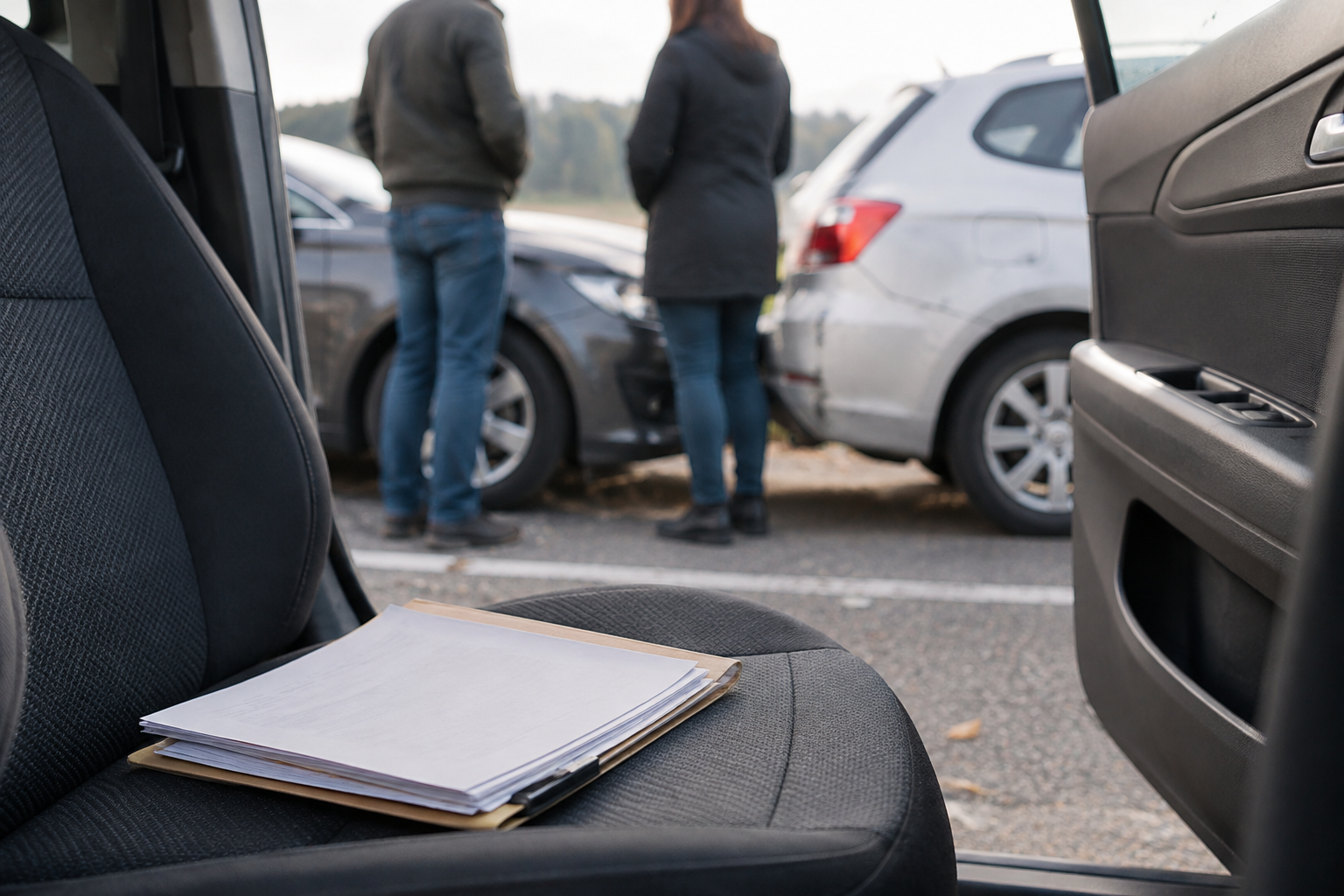
You're stopped at a light on the way to work when another driver bumps your car from behind. The vehicles still run, but later you're uncomfortable, missing work, and fielding insurance calls. If you're searching “minor car accident do i need a lawyer,” the short answer is: not always. A straightforward property-damage claim may be manageable yourself, but injuries, disputed fault, unpaid losses, or pressure to settle are reasons to consider a free case evaluation.
An evaluation can help you understand whether legal representation would add value before you commit to hiring anyone. Free Case Evals is not a law firm; it is a free service that connects people injured in motor vehicle accidents with participating attorneys for a free case evaluation. The information below is educational, not legal advice. Laws vary by state, so speak with a licensed attorney about your circumstances.
Does a minor car accident actually require a lawyer?
The useful question isn't just how hard the cars collided. It's whether you can document your losses, identify the available insurance, and resolve the claim without giving up rights you don't understand.
You may be comfortable handling a claim yourself when nobody is injured, fault is accepted, and the only disagreement involves an ordinary repair estimate. Even then, review any settlement paperwork carefully. A document intended to resolve vehicle damage should not unexpectedly release an injury claim.
An injury changes the decision. You might have a manageable repair bill but still need appointments, transportation, or time away from work. That doesn't automatically mean you need a lawsuit. It does mean the claim deserves a closer look.
What makes an evaluation worthwhile?
Consider asking for one if:
- You received medical care or have symptoms that need evaluation.
- The insurer says you caused or contributed to the crash.
- The other driver has no insurance or insufficient coverage.
- You are being asked to sign a release before your losses are clear.
- A commercial vehicle, employer, or government vehicle may be involved.
- You cannot tell which insurance policy should handle your bills.
A consultation can also help you distinguish an inconvenient process from a legal problem. Ask what an attorney would actually do that you cannot reasonably do yourself, and whether the likely work and fees make representation practical. You can request a free case evaluation without first figuring out all those answers.
Can a small dent still lead to an injury claim?
Visible vehicle damage and personal injury are separate issues. Repair photographs matter, but they do not establish everything about what happened to you. Likewise, feeling hurt does not by itself establish who is legally responsible or what compensation is available.
If you have symptoms after a crash, seek care from a qualified medical provider. Describe what happened, when you noticed the symptoms, and how they affect ordinary activities. Let the provider decide what evaluation or care is appropriate; do not seek treatment solely to create insurance records.
Build an accurate timeline, not a dramatic one
Say you finish your shift after the collision but need an appointment the next morning. Record those events accurately. Working immediately after a crash does not necessarily mean you were unhurt, but an unexplained timeline can invite questions.
Keep:
- Visit summaries and treatment recommendations.
- Medical bills, payment receipts, and insurance explanations of benefits.
- Appointment dates and related travel expenses.
- Brief notes about tasks you could not do or needed help completing.
Be honest about prior injuries or similar symptoms. An attorney can explain how an aggravation of a preexisting issue may be treated under applicable law; hiding relevant history can damage credibility.
Insurers may question whether care was connected to the crash, especially when records are incomplete or treatment was delayed. If scheduling, cost, or transportation prevented an appointment, preserve evidence of that barrier. Do not rewrite the timeline to make it look simpler.
Who might pay after a minor car accident?
A free evaluation can be especially useful when several policies may apply. Responsibility for causing the crash and responsibility for paying a particular bill immediately are not always the same thing.
The other driver's liability coverage
When another driver is legally responsible, their bodily injury liability coverage may pay covered injury losses, subject to policy limits and applicable law. Their property damage coverage generally addresses covered vehicle or other property losses separately.
The other insurer may investigate before accepting responsibility. A claim number is not an admission of fault, and opening a claim does not guarantee payment. Keep enough information to identify which claim concerns repairs and which concerns injuries.
Your own insurance and benefits
Depending on your state and policy, possible sources include:
- Personal injury protection, or PIP: May cover certain medical expenses and other benefits regardless of fault. No-fault systems vary, including restrictions on injury lawsuits.
- Medical payments coverage: May help with covered medical expenses, subject to policy terms.
- Uninsured/underinsured motorist coverage: May apply when an at-fault driver lacks insurance or has insufficient coverage. Eligibility, notice, and settlement-consent requirements vary.
- Collision coverage: May pay for your vehicle damage, usually subject to a deductible.
- Health insurance: May process covered care while an accident claim remains unresolved, with possible reimbursement issues later.
If the other driver was working, an employer or commercial policy might also warrant investigation. A work-related trip on your side may raise separate benefit questions. Bring your policy declarations page and any coverage letters to an evaluation; don't assume the adjuster handling repairs has identified every potential source of payment.
What evidence helps when fault is disputed?
A low-speed collision can still produce conflicting stories. One driver says you stopped suddenly; you say traffic had already stopped. In a parking lot, both drivers may insist the other vehicle was moving.
Preserve evidence before concentrating on arguments. Useful items include wide-angle scene photos, close-ups of damage, driver information, witness contact details, dashcam files, and the collision report number. Save original digital files when possible rather than only cropped screenshots.
If a nearby business may have recorded the crash, note its location and contact information promptly. Video can be overwritten. An attorney can explain whether a preservation request or another step is appropriate; do not assume a business must voluntarily give you footage.
What if the insurer says you're partly at fault?
Ask for the factual basis in writing. Was the decision based on a driver's statement, a photograph, a traffic rule, or something in the police report? A collision report can be useful, but it does not necessarily decide civil liability.
States apply different shared-fault rules. Comparative negligence can reduce compensation according to responsibility, and some versions restrict recovery above a threshold. Contributory negligence rules can be much more restrictive. A licensed attorney can explain which standard applies.
Avoid guessing about speed, distances, or timing just to fill a silence. Separate what you observed from what you inferred. For additional documentation steps, read what to do when another driver caused your crash.
Which losses should you document before discussing settlement?
A fair assessment starts with evidence, not a settlement calculator. The losses recoverable in your situation depend on state law, available coverage, responsibility for the crash, and proof connecting the loss to the collision.
Create a simple folder or spreadsheet with the date, expense, reason, amount billed, amount paid, and supporting document. Keep bills separate from insurance statements so the same charge isn't accidentally counted twice.
Medical expenses and work losses
For medical expenses, save itemized bills and records showing the care received. If further treatment is recommended, preserve that recommendation rather than estimating future costs yourself.
For missed work, collect pay stubs, schedules, attendance records, and employer confirmation of time missed. Record whether you used sick leave or vacation time; whether those losses are compensable depends on the circumstances and state law.
If you're self-employed, canceled appointment messages alone may not establish lost income. Contracts, invoices, tax records, and historical earnings may help show what work was lost and what you ordinarily earned. Distinguish lost revenue from lost profit.
Transportation, assistance, and daily disruption
Save receipts for rental transportation, necessary trips to appointments, and other crash-related expenses. If you paid someone for help with tasks you normally perform, keep invoices and explain why the assistance was needed. Not every inconvenience or purchase will be reimbursable.
Nonfinancial losses, such as pain and interference with everyday life, may also be relevant where the law allows them. Brief, factual notes are more useful than exaggerated descriptions. An evaluation can help you identify missing support without assigning an invented value to your experience.
How should you handle insurance calls and early offers?
An adjuster may need basic facts, supporting documents, and an explanation of your losses. Cooperating does not require guessing, agreeing with an inaccurate summary, or making a settlement decision during an unexpected phone call.
Keep a communication log with the date, person's name, claim number, documents requested, and any promised follow-up. Confirm significant discussions by email when possible. If the insurer says something is not covered, request the explanation and relevant policy language in writing.
Know whose insurer is asking
Your own policy may impose notice and cooperation obligations, including requirements related to statements. Requests from another driver's insurer raise different considerations. Before giving a recorded statement or signing a broad medical authorization, ask what is required, what the request covers, and whether you should speak with an attorney first.
Do not lie or conceal relevant facts. You can truthfully say you do not know an answer or need to check your records. For more practical preparation, see how to approach insurance adjuster conversations.
Read what an early payment would settle
An offer may arrive before all bills are available. Ask whether it resolves property damage only, bodily injury, or every claim arising from the crash. A release may prevent you from requesting additional compensation later, even if further expenses appear.
Before accepting, understand outstanding bills, potential reimbursement obligations, and any unresolved treatment recommendations. If another policy may apply, ask whether settling could affect that claim. Pressure to sign while those questions remain unanswered is a sensible reason to connect with a participating attorney for an evaluation.
What deadlines matter even for a small crash?
The statute of limitations sets a deadline for filing a lawsuit, but it isn't the only clock that can matter. Insurance notices, benefit applications, government-claim procedures, and evidence preservation can involve separate time-sensitive requirements.
The applicable deadlines depend on the state, the type of claim, the parties involved, and sometimes other facts. Do not assume an injury claim and a property-damage claim have identical deadlines. Claims involving public entities may require special notice much earlier than an ordinary lawsuit deadline.
An open claim does not necessarily protect your deadline
Negotiating with an insurer generally does not, by itself, pause the statute of limitations. Neither does waiting for an adjuster to call back. Ask a licensed attorney to identify the relevant dates rather than relying on an informal assurance that the claim is still being reviewed.
Put these items in one place:
- The crash date and location.
- Dates you first notified each insurer.
- Every letter mentioning a response deadline.
- Any benefit application or notice forms.
- Any release, denial, or proposed settlement agreement.
Evidence has its own practical deadline: it may disappear. Cars get repaired, video is deleted, and witnesses become harder to reach. Preserve what you can promptly without putting yourself at risk.
A claim can take time for legitimate reasons, including gathering records and evaluating losses. Understanding the stages of a car accident settlement can help you distinguish normal progress from a file that needs follow-up.
What happens during a free case evaluation?
You do not need a polished presentation. A useful starting point is a short account of where the crash happened, who was involved, what you experienced afterward, and what the insurers have said so far.
Have your best available documents nearby: photos, the report number, insurance information, medical paperwork, proof of missed work, and any settlement offer. Missing paperwork should not prevent you from asking about a potentially urgent deadline. Tell the attorney what you have and what you still need.
Ask questions that help you make a decision
Rather than asking only what the case is worth, ask:
- What issues make this claim straightforward or difficult?
- Which parties or policies should be investigated?
- What evidence would most improve the assessment?
- Are there deadlines or insurance requirements needing immediate attention?
- What tasks would your office handle if I hired you?
- Could attorney fees, case costs, or reimbursement claims substantially affect what I receive?
An evaluation is not a promise that an attorney will accept your case or that compensation will follow. It also does not automatically establish representation. Confirm whether the attorney is offering to represent you and what agreement is required.
A free evaluation does not mean all later legal services are free. If representation is offered, request a written explanation of fees and expenses. Ask how costs are handled if there is no recovery, when fees are calculated, and who addresses medical liens or insurer reimbursement demands. You should understand those terms before signing.
Request a free case evaluation before deciding your next step
You don't have to label your crash “serious enough” before asking questions. If you were injured and are unsure about a release, a fault dispute, missing wages, or available coverage, bring that specific concern to an evaluation. A focused question can make the conversation useful even when the physical damage looks modest.
Before the call, write down your biggest unresolved issue and gather the document most closely connected to it. That might be a denial letter, an unpaid bill, or a proposed settlement. Mention any stated deadline at the beginning of the conversation.
Free Case Evals is not a law firm and does not provide legal advice. It connects people injured in motor vehicle accidents with participating attorneys for a free case evaluation. Request your free case evaluation to discuss your situation with a licensed attorney and better understand whether handling the claim yourself or seeking representation makes sense for you.
Frequently Asked Questions
Can I get a free case evaluation if the police did not come to the crash?
Yes, you can request an evaluation without a police report. Photos, witness information, messages between drivers, and insurance records may still help an attorney assess the situation. Ask about any state or local crash-reporting requirements that may apply.
What if I already told the insurance company I was fine?
An initial statement that you felt fine does not necessarily end a later injury claim, but the insurer may examine it alongside your medical records and timeline. Explain any change accurately and see a qualified medical provider if you have symptoms. A licensed attorney can discuss how the statement may affect your particular claim.
Can an injured passenger request a case evaluation after a minor crash?
Yes. Depending on fault, state law, and coverage, a passenger may have options involving one or more drivers' policies or other applicable benefits. Tell the attorney your relationship to the drivers because policy exclusions and household rules can affect coverage.
Does accepting money for car repairs mean my injury claim is closed?
Not necessarily; it depends on the payment terms and any release you accepted. Some payments resolve property damage alone, while broader agreements may release additional claims. Have a licensed attorney review unclear language before signing or accepting a payment conditioned on a release.
What if an attorney declines my minor accident case?
A decision not to accept representation does not automatically mean you have no valid claim. Attorneys may consider disputed liability, available coverage, anticipated costs, and the services their practice offers. You can ask why the case was declined and seek another evaluation without assuming any deadline has paused.
This article is for general informational purposes only and is not legal or medical advice. Laws vary by state. Speak with a licensed attorney about your specific situation.
Hurt in a car accident?
Answer a few quick questions to see if you may qualify for a free case evaluation. No cost, no obligation.
Start My Free Case Evaluation