
Your Rear-End Collision Claim: What to Know Before You Settle
Free Case Evals · October 2, 2026
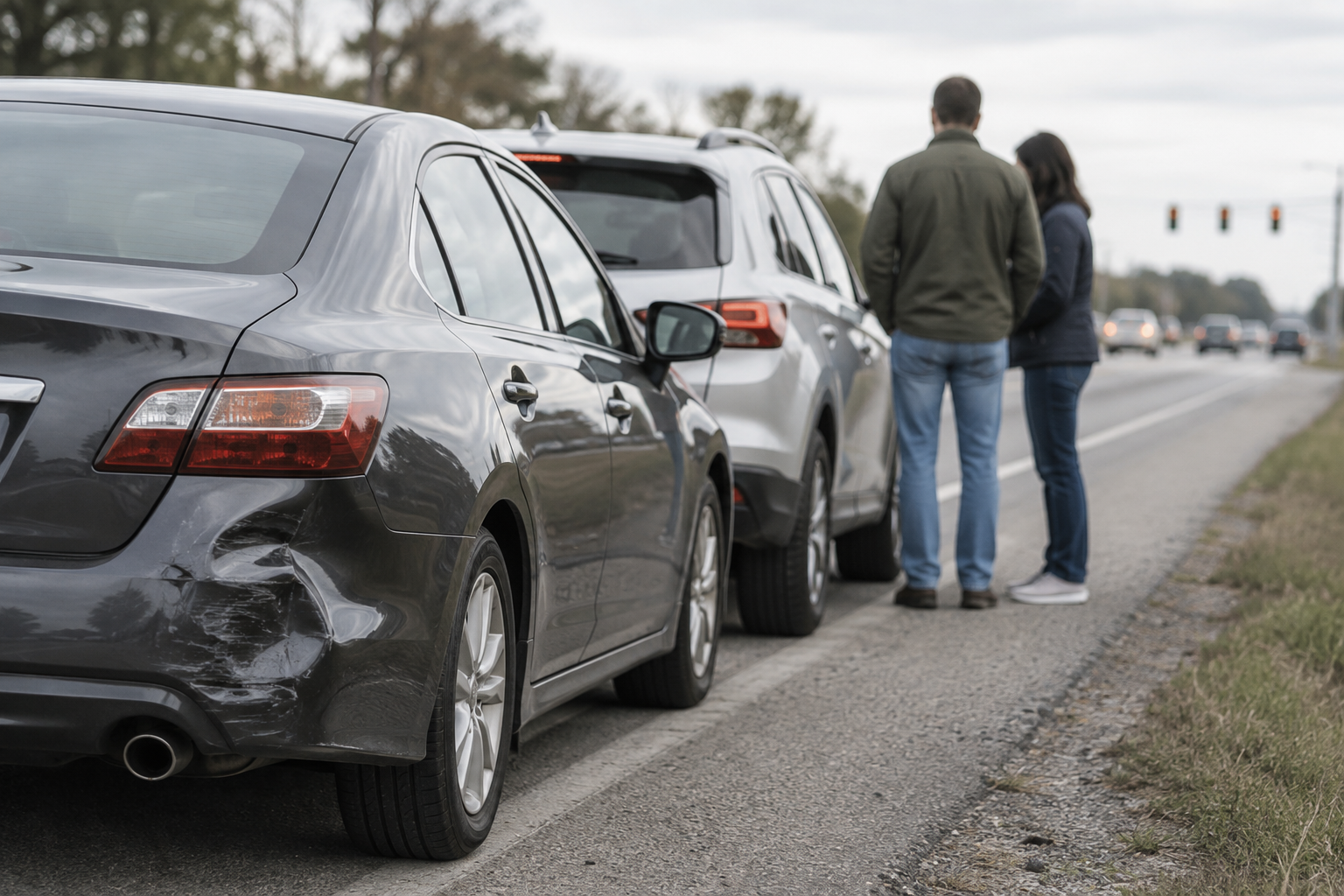
You're stopped at a light on the way to work when another vehicle hits you from behind. Now your car needs repairs, you're hurting, and an insurance adjuster wants answers. A rear-end collision claim can involve more than showing which bumper was damaged. You may also need to document your injuries, identify available coverage, and explain how the crash disrupted your life.
You don't have to solve everything at once. Start with your safety and medical needs, then build a clear record of what happened. This guide explains how these claims are commonly handled, where disagreements arise, and what information can help you make informed decisions.
This is general educational information, not legal advice. Laws and insurance rules vary by state. A licensed attorney can explain the rules that apply to your circumstances; Free Case Evals is not a law firm.
1. How Fault Works in a Rear-End Collision Claim
The driver who hits another vehicle from behind is often investigated for following too closely, driving too fast for conditions, or failing to pay attention. But rear-end damage alone does not resolve every question about responsibility. Insurers examine how the collision occurred, and state law determines how fault affects recovery.
Why the rear driver is often considered responsible
Drivers generally must leave enough room to respond when traffic slows or stops. If you're waiting at a red light and someone strikes your stationary car, that sequence can strongly support your account.
Useful evidence may include a witness who saw you stopped, traffic-camera footage, and photographs showing the vehicles' positions. A citation can help establish context, but neither a ticket nor a police report automatically settles a civil claim.
When fault becomes more complicated
Some collisions require a closer look. Examples include:
- A vehicle reverses into the car behind it.
- A driver changes lanes immediately before impact.
- A vehicle has nonworking brake lights that may have contributed to the crash.
- A middle vehicle is pushed into the car ahead by another impact.
- Drivers disagree about whether there was one impact or several.
These situations do not automatically excuse the rear driver. They show why the sequence matters. Describe what you actually saw, heard, and felt rather than guessing about another driver's speed or intentions.
What shared fault can mean
States use different rules when more than one person contributed to a crash. Your share of responsibility may reduce compensation, and in some states it can prevent recovery under certain circumstances.
If an adjuster says you were partly at fault, ask what evidence supports that position. Save the explanation and any supporting documents. Avoid accepting a fault assessment simply because it sounds official. A licensed attorney can review the evidence and explain your state's rules.
2. What to Do After a Rear-End Crash to Protect Your Record
Once you're out of immediate danger, think in terms of preserving information—not proving your entire case at the roadside. Get emergency help when needed, follow local reporting requirements, and seek assessment from a qualified medical provider if you're hurt or concerned about symptoms.
For a more immediate action plan, use this car accident first-hours checklist. The steps below focus on information that often matters specifically in a rear-end claim.
Capture the scene without putting yourself at risk
If it is safe, photograph more than the damaged bumpers. Include lane markings, traffic lights, road conditions, debris, and the surrounding area. Photograph all involved vehicles, including license plates and visible damage.
For a chain-reaction crash, write down where each vehicle was positioned. Note whether you felt an impact before your car moved forward, and whether you heard or felt additional impacts afterward. Don't turn an uncertain memory into a firm statement.
Collect:
- Driver names, contact information, and insurance details.
- Witness names and reliable contact information.
- The responding agency and report or incident number.
- The approximate time, location, and direction of travel.
- Information identifying a commercial vehicle or its employer, if relevant.
Preserve evidence that may disappear
Dashcam recordings can be overwritten. Nearby businesses may retain surveillance footage only briefly. Save your own recordings in their original format, make a backup, and identify possible camera locations promptly. An attorney can discuss appropriate preservation requests when someone else controls the footage.
Keep towing receipts, storage notices, repair estimates, and photographs taken before repairs. If a vehicle may contain relevant electronic information, ask about preserving it before the vehicle is sold, scrapped, or substantially altered.
You don't need a perfect file before seeking help. If you're unsure what evidence matters, you can request a free case evaluation through Free Case Evals, a service that connects injured people with participating attorneys.
3. Documenting Injuries, Expenses, and Everyday Disruption
An injury claim usually requires more than showing that a crash happened. The records must also help connect the collision to your injuries and losses. That connection is easier to evaluate when your documentation is timely, accurate, and consistent.
Keep medical information clear and complete
Tell a qualified medical provider when the crash occurred, what happened, and what you're experiencing. Follow the provider's recommendations, and ask questions if instructions are unclear. If new concerns arise, contact a provider rather than relying on an insurance adjuster to assess them.
Avoid exaggerating symptoms or minimizing them to sound tough. If sitting through your commute has become difficult, say that. If an activity hasn't changed, you don't need to suggest otherwise.
Save visit summaries, referrals, prescriptions, bills, and insurance explanations of benefits. These documents serve different purposes: a bill shows a charge, while an explanation of benefits may show what an insurer processed or paid.
If you miss treatment because of transportation, cost, or scheduling problems, keep a note of the barrier and contact the provider about options. An unexplained gap can raise questions, even when there's an ordinary reason behind it.
Track financial losses as they happen
Create one folder—digital or paper—for crash-related expenses. Include:
- Medical bills and out-of-pocket payments.
- Receipts for transportation to appointments.
- Pay records and employer documentation of missed work.
- Repair estimates, deductible payments, and rental receipts.
- Records of necessary paid help with tasks you cannot currently manage.
Not every expense is recoverable in every claim. Saving documentation lets an attorney or insurer evaluate it instead of relying on a later estimate.
Use a simple daily-impact journal
A few factual lines are enough. Record missed shifts, canceled activities, help you needed, and limitations you discussed with your provider. For example, note that you left work early for an appointment rather than writing only that it was a difficult day.
Assume relevant notes and social media posts could be reviewed during a dispute. Be truthful, avoid public arguments about fault, and ask an attorney before deleting potentially relevant material.
4. Understanding Insurance Coverage and Adjuster Requests
You may hear from several insurance representatives after the same crash. One may handle vehicle repairs, another injuries, and another benefits under your own policy. Ask each person which insurer they represent and which part of the claim they handle.
Keep a communication log with names, dates, claim numbers, and brief notes. When a conversation includes a deadline, coverage decision, or document request, ask for written confirmation.
Different coverage can serve different purposes
Depending on the state, policies, and facts, coverage may include:
- The other driver's liability insurance: May cover losses for which that driver is legally responsible, subject to policy terms and limits.
- Personal injury protection or medical payments coverage: May help with eligible expenses under your own policy, sometimes regardless of fault.
- Collision coverage: May pay for covered vehicle damage under your policy, usually subject to a deductible.
- Uninsured or underinsured motorist coverage: May apply when the responsible driver has no applicable insurance or insufficient coverage, subject to state law and policy requirements.
In some states, no-fault rules affect how injury expenses are paid and when you can pursue certain damages against another driver. Don't assume that using your own coverage means you're admitting fault.
Handle statements and authorizations carefully
Your policy may require prompt notice and cooperation. The other driver's insurer has a different relationship with you, so distinguish its requests from your own insurer's requirements.
Before a recorded statement, ask its purpose and whether you can schedule it after reviewing the request with an attorney. Answer truthfully and avoid guessing. If you don't know a detail, say so.
Read medical authorizations before signing. Ask which providers, dates, and records the authorization covers. Relevant medical history may legitimately matter, but you should understand the scope of what you're authorizing.
If you're overwhelmed by requests or conflicting coverage explanations, you can connect with a participating attorney for a free evaluation. Free Case Evals facilitates that connection; it does not provide legal representation.
5. What Can Affect a Rear-End Collision Claim's Value
There is no reliable universal payout for being rear-ended. A claim's potential value depends on documented losses, responsibility, available coverage, and applicable law. Similar-looking vehicle damage can accompany very different circumstances, so online averages are not a dependable way to assess your situation.
Separate the categories of loss
Depending on your state and the evidence, a claim may involve:
- Reasonable, crash-related medical expenses.
- Lost earnings supported by employment records.
- Future medical needs or reduced earning ability when adequately supported.
- Pain, suffering, or other nonfinancial harm recognized by state law.
- Vehicle repair or replacement costs and other eligible property losses.
Future losses generally require more than your own prediction. Medical opinions, employment information, or other qualified evidence may be needed. Keep injury and property-damage documents organized separately so you can see which issues an offer addresses.
Understand common points of disagreement
An insurer may question whether treatment relates to the crash, whether charges are reasonable, or whether missed work was necessary. Prior injuries or similar earlier symptoms can also lead to requests for additional records.
Be honest about your history. A preexisting issue does not automatically eliminate a claim for crash-related harm, but distinguishing earlier problems from new or worsened limitations can require careful documentation.
Likewise, modest visible vehicle damage does not by itself determine whether you're injured. Photos are one part of the record; medical findings and the collision circumstances also matter.
Look beyond the headline settlement figure
Before evaluating an offer, identify outstanding bills, potential reimbursement claims, and any attorney fees or costs if you hire counsel. Some health plans, benefit programs, or providers may have rights to payment from a recovery, depending on the circumstances.
Ask for an explanation of what an offer covers and what obligations may remain. The useful question is not simply whether the number sounds substantial, but whether you understand the evidence, unresolved needs, and proposed terms.
6. The Claim Process, Settlement Decisions, and Deadlines
A rear-end injury claim often moves through reporting, investigation, collection of medical and financial records, and negotiations. Not every claim follows the same order. Property damage may be handled while your injury-related documentation is still developing.
Why some claims take longer
Disputed fault, multiple vehicles, unavailable records, and coverage questions can all slow a claim. Ongoing care may also make it difficult to assess the full extent of your losses.
Ask the adjuster what information is missing and who is responsible for obtaining it. A focused question—such as whether they are waiting for an employer's wage verification—usually produces a more useful answer than repeatedly asking when payment will arrive.
Keep copies of everything you submit and note the delivery date. If an insurer denies coverage or rejects an expense, request its reasoning in writing.
Read releases before accepting payment
A settlement release may end your ability to seek additional compensation for the claims it covers, even if you later discover further expenses. Before signing, determine whether it addresses property damage only, injury claims, or both.
Do not assume a payment labeled as quick assistance comes without conditions. Review accompanying documents, electronic acceptance screens, and any release language. If the scope is unclear, have a licensed attorney explain it before you agree.
Do not confuse negotiations with deadline protection
States impose filing deadlines, often called statutes of limitations. Insurance policies may also contain notice requirements, and claims involving government entities can involve separate, shorter procedures. Special circumstances can change which rules apply.
Ongoing negotiations generally do not, by themselves, pause a lawsuit deadline. Ask an attorney to identify relevant dates early rather than relying on an adjuster's statement that the file remains open.
If negotiations do not resolve the dispute, an attorney can explain whether litigation is an option and what it would involve. Filing a lawsuit does not guarantee a trial or a particular result. Understanding the choices helps you weigh the time, evidence, and risks without rushing into a release.
7. Request a Free Evaluation of Your Rear-End Collision Claim
You do not have to wait until an insurer denies your claim to ask questions. A case evaluation can help you discuss disputed fault, confusing paperwork, or an offer you don't fully understand with a participating attorney.
Before the conversation, gather what you already have:
- The crash date, location, and a brief factual description.
- Insurance information and claim numbers.
- Photos, witness details, and the police report number.
- A basic treatment timeline and records of missed work.
- Any settlement offer, release, denial, or deadline notice.
Missing documents should not stop you from requesting an evaluation. Make a short list of questions, including which deadlines may apply, what evidence needs preserving, and whether there are coverage issues to investigate.
Free Case Evals is a free service that connects people injured in motor vehicle accidents with participating attorneys for a free case evaluation. It is not a law firm and does not give legal advice. An evaluation does not promise compensation or establish that an attorney will accept your case.
If you choose to hire an attorney, ask about the representation agreement, fees, and costs before signing. For a starting point, request your free case evaluation and bring the questions that are making your next step feel uncertain.
Frequently Asked Questions
Can I pursue a claim if the rear-end crash happened on private property?
A crash in a parking lot or on other private property may still support an insurance or injury claim. Responsibility depends on the facts, applicable law, and coverage—not just whether the road was public. Ask a licensed attorney about any reporting or evidence issues specific to the location.
What if the driver who rear-ended me left the scene?
Report the incident to the appropriate authorities and notify your insurer promptly. Preserve identifying details, witness information, and any available recordings without trying to chase the other vehicle. Uninsured motorist or other coverage may apply, but requirements vary by state and policy.
Can a passenger bring a rear-end collision claim?
An injured passenger may have a claim against one or more responsible drivers, depending on the collision and state law. Available coverage can include policies associated with different vehicles. A licensed attorney can help identify potential claims and any coverage complications.
Should I notify my insurer if the other driver offers to pay privately?
Review your policy's reporting requirements rather than assuming a private arrangement removes them. Repair needs and injury-related expenses may not be clear immediately, and a private promise does not establish insurance coverage. Speak with a licensed attorney before signing an agreement that could release claims.
Will requesting an evaluation obligate me to hire an attorney?
Requesting a free case evaluation through Free Case Evals does not obligate you to hire an attorney. Free Case Evals is a connection service, not a law firm. Any later representation and its terms should be discussed directly with the participating attorney.
This article is for general informational purposes only and is not legal or medical advice. Laws vary by state. Speak with a licensed attorney about your specific situation.
Hurt in a car accident?
Answer a few quick questions to see if you may qualify for a free case evaluation. No cost, no obligation.
Start My Free Case Evaluation