
Uninsured Motorist Accident: What If the At-Fault Driver Cannot Pay?
Free Case Evals · October 3, 2026
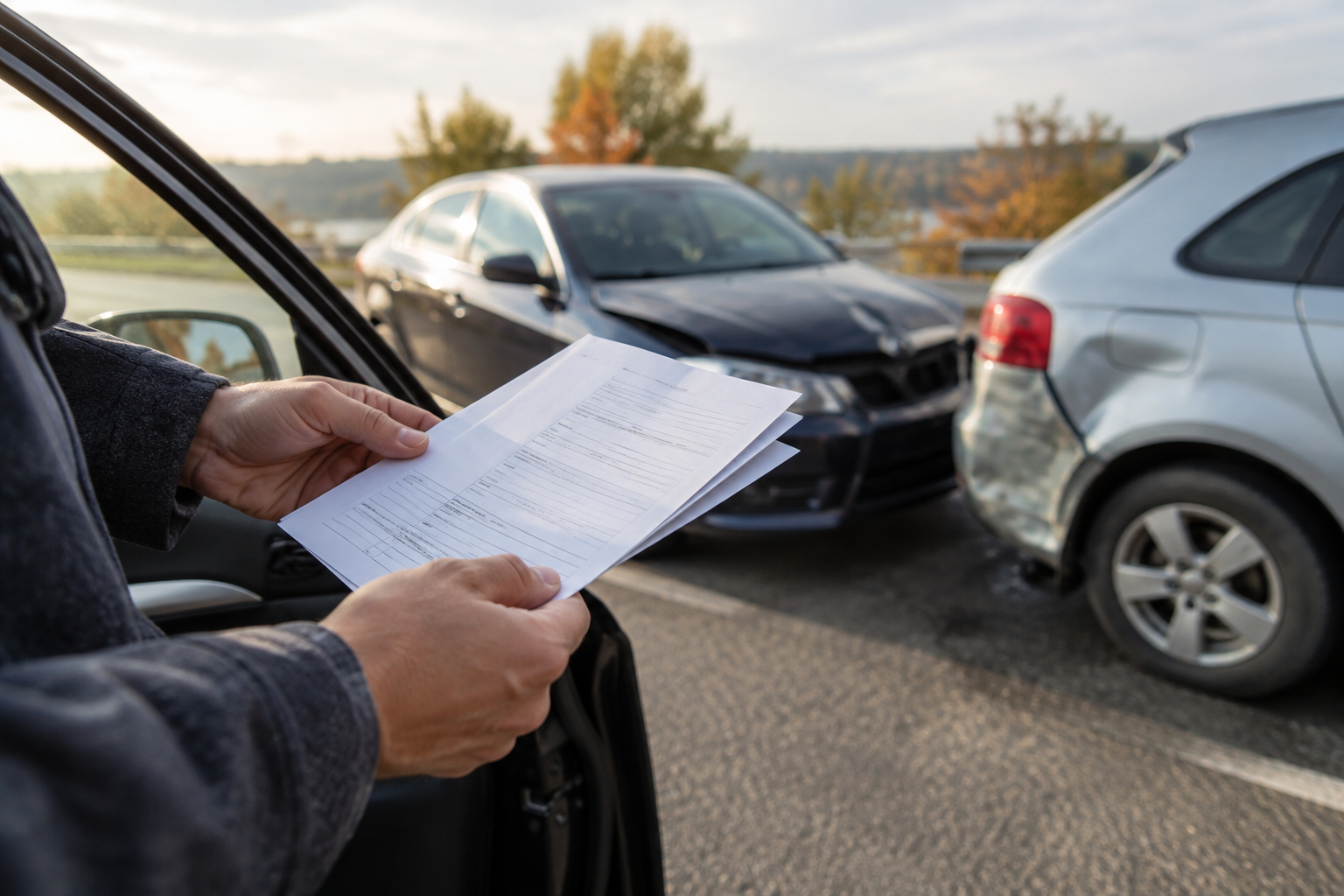
An uninsured motorist accident can leave you wondering how you will pay for treatment, get your car repaired, or cover missed work. If the at-fault driver has no insurance, you may still recover compensation through your own coverage or a claim against another legally responsible party. You can also pursue the driver personally, but collecting payment may be difficult if they lack reachable income or assets.
Say you are stopped at a light on the way to work when another driver rear-ends you. They apologize, then admit their policy expired. That changes where you may seek payment, but it does not erase the evidence or your losses. This guide explains what to check and preserve next. It provides general educational information, not legal advice; laws and insurance rules vary by state, so speak with a licensed attorney about your situation.
What should you do after an uninsured motorist accident?
Start with safety and appropriate medical care, not an argument about who will pay. Contact emergency services when needed, follow local crash-reporting requirements, and see a qualified medical provider for injury concerns. Do not delay care simply because the other driver says there is no insurance.
If you can safely gather information, collect:
- The driver's name, contact details, license information, and license plate.
- The vehicle owner's information if someone else owns the car.
- Any insurance card the driver provides, even if they believe it expired.
- Photos of vehicle positions, damage, road conditions, signs, and debris.
- Witness names and contact information.
- The responding agency's name and report or incident number.
Avoid accepting a roadside cash offer or signing a statement that the matter is settled. You may not yet understand your injuries, repair costs, or coverage. Save any messages in which the driver admits fault or says they are uninsured, but do not rely on those messages alone to establish your claim.
Report the collision promptly to your insurer, even if you are unsure which coverage applies. Give accurate facts, avoid guessing, and ask for a claim number and written instructions. If you need a more detailed starting list, use this first-hours crash checklist.
Keep everything in one folder, with a simple contact log. Record whom you spoke with, when, what they requested, and what you sent. That small habit can prevent missed requests when several adjusters become involved.
How do you confirm the at-fault driver has no insurance?
A driver's statement is a starting point, not a final coverage determination. They may misunderstand their policy, be driving a borrowed vehicle, or have coverage through work. Conversely, an insurance card can look valid even when the policy was canceled before the crash.
Share the available policy and vehicle information with your insurer. Ask what investigation it will conduct and what documentation it needs to treat the other vehicle as uninsured. If another insurer denies coverage, request the denial in writing, including the reason and effective dates involved.
Check the driver, vehicle owner, and purpose of the trip
Potential coverage may depend on facts that are not obvious at the scene:
- Borrowed vehicle: The owner's policy may apply, depending on permission, exclusions, and state law.
- Work-related driving: An employer's commercial coverage or legal responsibility may be relevant.
- Delivery or rideshare activity: Personal and commercial policies may respond differently depending on the driver's activity at the time.
- Recently changed coverage: A replacement policy or cancellation issue may require investigation.
Do not assume any of these facts guarantees coverage. Preserve details such as a company vehicle marking, the driver's explanation of the trip, or the vehicle registration, and let the appropriate professionals investigate.
A written coverage denial also does not always resolve every question. Ask whether the denial concerns this driver, this vehicle, this use, or the policy itself. Those distinctions may affect which claim you pursue next.
Which insurance can pay when the other driver is uninsured?
You may have several useful coverages, each serving a different purpose. Get your declarations page, full policy, and endorsements. The declarations page lists coverage types and limits, but the policy language explains who qualifies and what restrictions apply.
Uninsured motorist bodily injury coverage
Uninsured motorist coverage, often called UM, may compensate insured people for injuries caused by a legally responsible uninsured driver. Depending on state law and policy terms, covered losses can include medical expenses, lost income, and pain and suffering.
Although you submit the claim to your own insurer, you generally still must establish fault and damages. Coverage may extend beyond the named policyholder, but household members, passengers, and people injured outside an insured vehicle require a policy-specific review. Underinsured motorist coverage, or UIM, addresses a different problem: the at-fault driver has insurance, but the available limits are insufficient under applicable rules.
PIP and medical payments coverage
Personal injury protection, or PIP, may pay certain expenses regardless of fault, subject to state rules and policy limits. In no-fault states, PIP commonly provides an initial source of benefits. Medical payments coverage, often called MedPay, may help with eligible medical expenses but usually offers a narrower set of benefits.
Ask whether applications, treatment-related requirements, or separate benefit deadlines apply. Do not assume opening a general claim automatically completes every benefits request.
Collision and uninsured motorist property damage
Collision coverage may pay for repairs or a covered total loss, usually subject to a deductible. Uninsured motorist property damage coverage may also help where available, but eligibility, deductibles, and restrictions vary. Rental reimbursement is typically a separate coverage with its own limits.
If these terms are overwhelming, you can request a free case evaluation to connect with a participating attorney and discuss possible recovery options. Free Case Evals is not a law firm.
How do you prove fault and the value of your losses?
Being uninsured does not automatically make the other driver responsible for the collision. Your evidence must connect their conduct to the crash and connect the crash to the losses you claim. An adjuster may dispute either part, even when nobody questions the lack of insurance.
Build a clear record of how the crash happened
Preserve scene photos, witness information, available dashcam footage, and the crash report. Write down what you remember while it is fresh, separating observations from assumptions. If a nearby business may have video, act promptly because recordings can be overwritten; an attorney can help with preservation requests.
Review the crash report for factual errors and ask the agency about its correction process. A report can be useful evidence, but it does not necessarily settle fault. In a rear-end collision, for example, vehicle positions and the sequence of impacts may matter. This guide to rear-end crash claims explains related evidence issues.
Match each loss with supporting documents
Keep a running file of:
- Medical expenses: Bills, records, payment receipts, and insurance benefit statements.
- Missed income: Pay stubs, schedules, employer confirmation, and relevant work restrictions.
- Self-employment losses: Contracts, invoices, canceled bookings, and financial records showing actual lost earnings.
- Property losses: Repair estimates, towing bills, storage charges, and rental receipts.
- Daily limitations: Brief, dated notes describing specific activities you cannot do or need help completing.
Be accurate rather than dramatic. A note that you needed help carrying groceries is more useful than a vague claim that everything changed.
Comparative negligence rules can reduce compensation when you share fault. In some jurisdictions, contributory negligence can bar recovery for qualifying fault. Ask a licensed attorney how your state's rules affect the evidence you need.
What happens when you file an uninsured motorist claim?
A UM claim is not simply a bill reimbursement request. Your insurer may investigate coverage, the other driver's insurance status, fault, the connection between the crash and your injuries, and the amount of your losses. Different adjusters may handle property damage, medical benefits, and bodily injury compensation.
Ask the insurer to identify each open claim and explain the next steps in writing. Useful questions include:
- Which coverage are you evaluating, and who is handling it?
- What proof do you need that the other driver was uninsured?
- What information is missing from my submission?
- Are you disputing coverage, fault, or the amount claimed?
- What policy provisions and deadlines apply?
Your policy may require reasonable cooperation, statements, records, or examinations. Do not ignore requests, but ask what is required and why. Before giving a recorded statement or signing a broad records authorization, you can seek an attorney's guidance about the scope and your obligations.
Respond to disputes with specific evidence
An insurer may question a treatment gap, a wage-loss calculation, or whether certain care relates to the crash. Ask it to identify the disputed issue rather than responding with a larger pile of unsorted documents. If you missed an appointment because transportation fell through, preserve the actual explanation; do not create one after the fact.
A denial or low offer is not automatically the end of a claim. Request the written basis and applicable policy language. Depending on the policy and state law, disputes may involve additional review, negotiation, arbitration, or litigation. An insurance regulator may address certain claim-handling complaints, but a complaint generally does not replace a lawsuit or extend filing deadlines.
Can you sue an uninsured driver or another responsible party?
An uninsured driver can still be personally liable for causing your injuries. The practical question is whether pursuing them is likely to produce collectible compensation. Winning a judgment and actually receiving payment are different things.
State laws protect some income and property from collection, and a defendant may have few reachable assets. An attorney can evaluate potential collection options, costs, exemptions, and possible bankruptcy issues before you invest time in a lawsuit. Do not assume someone can pay because they drive an expensive-looking vehicle—or cannot pay because they say they have no money.
Look beyond the driver without assuming liability
Other parties may bear responsibility when the facts and law support it. Examples include an employer responsible for an employee's work-related driving, another motorist who contributed to the collision, or a vehicle owner who negligently entrusted the car to an unsafe driver. Ownership alone does not establish liability everywhere.
Claims involving defective products or unsafe roadway conditions require different evidence and may carry special procedural requirements. They should be investigated when the facts point that way, not added speculatively.
Tell your insurer or attorney about all vehicles involved and anything suggesting work-related driving. Preserve witness descriptions and photographs that could help identify additional parties.
Avoid signing a private repayment agreement or release without understanding its effect on your insurance claim. Your insurer may have reimbursement or subrogation rights against the driver after paying you. A release could interfere with those rights and affect coverage. You can see whether you may have a case before deciding how to proceed.
How can you manage bills and car costs while the claim is pending?
A pending injury claim does not automatically pause medical bills, towing fees, or loan payments. Deal with immediate expenses separately from the larger compensation claim so avoidable charges do not accumulate.
For medical bills, provide available health insurance and auto medical coverage information, then ask providers how billing is being coordinated. Keep copies of explanations of benefits and notices of unpaid balances. Do not assume a provider has agreed to wait for a settlement unless you have confirmation.
Health insurers, government benefit programs, or providers may have reimbursement rights or liens against a recovery. The rules differ, but these obligations can affect what you ultimately keep. Flag reimbursement letters for your attorney rather than setting them aside.
Keep property expenses from growing unnecessarily
Ask where your vehicle is stored and whether daily fees are accruing. Coordinate inspection and movement promptly when safe and appropriate, while preserving photos and any evidence needed for a disputed claim.
If the vehicle is considered a total loss, request the valuation report. Check the mileage, trim, options, condition, and comparison vehicles for errors. Keep receipts for reasonable transportation costs, but verify rental coverage and its limits before assuming reimbursement.
Your loan balance and the vehicle's covered value may differ. Ask about any gap coverage you purchased, and continue communicating with your lender about payment obligations.
For missed work, request written confirmation of dates, hours, and pay affected. Track paid leave used as well, since its treatment varies. A clear expense ledger helps you make immediate decisions without confusing bills incurred, amounts paid by insurance, and losses still outstanding.
What deadlines and settlement mistakes can affect your claim?
Several different clocks may be running after an uninsured motorist accident. A statute of limitations sets a deadline for filing a lawsuit, but insurance notice requirements, benefit applications, and contractual procedures may require earlier action. The deadline for a UM dispute may also be calculated differently from the deadline for suing the driver.
Ask a licensed attorney to identify the deadlines for every potential claim. Do not rely on a friend's experience in another state or assume ongoing negotiations preserve your rights. Claims involving government entities may have especially short notice requirements.
Get written clarification before accepting payment
Before accepting a settlement, determine:
- Which claim the payment resolves.
- Whether the release covers bodily injury, property damage, or both.
- Whether it releases other people or insurers.
- Whether your insurer's consent is required.
- Whether liens or reimbursement obligations remain.
- Whether future crash-related losses would be excluded after settlement.
A final bodily injury release typically closes the claim even if you later discover additional losses. That does not mean you should delay every decision indefinitely; it means you need enough information to understand what you are giving up.
Unknown-driver crashes can raise additional policy requirements, including reporting, corroboration, or physical-contact rules in some situations. If the driver fled, review these next steps after a hit-and-run and ask about the requirements that apply to your policy.
Save every deadline notice and settlement document. When something is unclear, ask for an explanation before signing, not after the payment clears.
Request a free case evaluation after an uninsured motorist accident
You do not need a perfectly organized file to ask for help. Bring whatever you have: the crash report number, insurance information, photos, medical bills, wage records, and letters from adjusters. A short timeline and a list of unanswered questions can make the conversation more productive.
Consider asking which coverage may apply, whether another party should be investigated, which deadlines need immediate attention, and what documents would strengthen your claim. If an offer is already on the table, have the offer and proposed release available for review.
Free Case Evals is a free service that connects people injured in motor vehicle accidents with participating attorneys for a free case evaluation. It is not a law firm and does not provide legal advice. You can request your free case evaluation here to discuss your circumstances with a participating attorney. An evaluation does not guarantee representation or compensation, but it gives you an opportunity to ask informed questions before your next decision.
Frequently Asked Questions
Can uninsured motorist coverage apply if I was walking or riding a bicycle?
It may, depending on who qualifies as an insured person, the circumstances of the collision, and applicable policy exclusions. Do not assume coverage is unavailable just because you were not inside your car. Ask a licensed attorney to review the policy and state law.
Can I combine uninsured motorist limits from more than one policy?
Combining limits is often called stacking. Whether it is allowed depends on state law, policy language, coverage selections, and the policies involved. Having several vehicles insured does not automatically mean you can combine their limits.
Will filing an uninsured motorist claim increase my premium?
There is no universal answer because state protections, insurer rating practices, and your circumstances differ. Some states restrict certain premium increases for accidents that were not your fault. Ask your insurer how the claim may affect renewal pricing and request an explanation of any change.
What if I did not have insurance either?
You may still have a claim against a responsible driver, but some states limit certain recoveries for uninsured vehicle owners or drivers. Separate penalties for driving without required coverage may also apply. A licensed attorney can explain how your insurance status affects your options.
Does a free case evaluation mean hiring an attorney is free?
No. The evaluation through Free Case Evals is free, but any later representation is governed by a separate agreement with the attorney. Before hiring someone, ask about fees, case expenses, and what you could owe if no compensation is recovered.
This article is for general informational purposes only and is not legal or medical advice. Laws vary by state. Speak with a licensed attorney about your specific situation.
Hurt in a car accident?
Answer a few quick questions to see if you may qualify for a free case evaluation. No cost, no obligation.
Start My Free Case Evaluation