
Rental Car After Accident Who Pays? Your Options by Fault
Free Case Evals · October 23, 2026
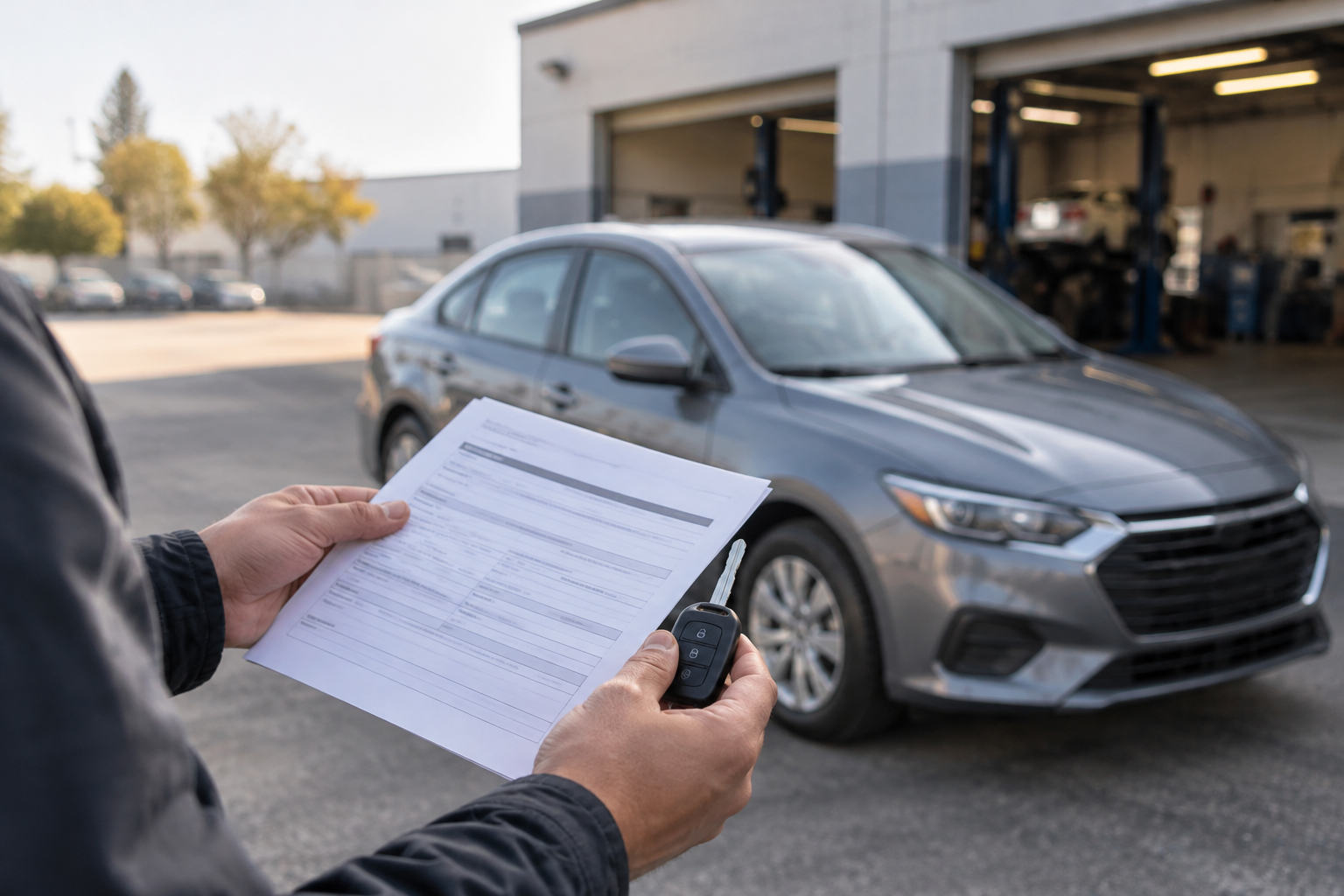
If you’re searching “rental car after accident who pays,” the short answer is this: the other driver’s insurer may cover reasonable rental expenses if that driver caused the crash and the claim is covered. If you caused the accident, your own optional rental reimbursement coverage may pay, subject to its terms. Without available coverage—or while responsibility is disputed—you may need to pay upfront, with reimbursement uncertain.
That distinction matters when you need transportation to work, medical appointments, or school pickup tomorrow. The company that takes your credit card today is not necessarily the party that ultimately bears the expense. Before reserving a vehicle, you need to know who has approved payment, what they approved, and when that approval ends.
This guide focuses on temporary transportation while your own car is unavailable, not a crash involving a car you already rented. For broader claim issues, see our guides to dealing with an insurance adjuster and deciding whether you need a car accident lawyer. The information here is general education, not legal advice; coverage and laws vary by state.
If you were also injured, keep rental receipts separate from medical bills and missed-work records. The car accident settlement calculator can illustrate an injury-loss range using those inputs, but it does not decide whether rental charges are covered or approved. Do not count a reimbursed expense twice.
Who Pays for a Rental Car After an Accident That Wasn't My Fault?
The responsible driver’s insurer may pay your rental expenses through the property-damage claim. However, believing the other driver caused the collision is not the same as receiving payment authorization. The insurer may first investigate responsibility, confirm coverage, and review the transportation you need.
Say you’re stopped at a light and get rear-ended on your way to work. Your vehicle needs repairs, but the other driver’s adjuster has not finished reviewing the crash. You can request a rental immediately, but do not assume a reservation means the insurer has agreed to pay.
Enterprise’s accident-rental guidance recommends discussing rental needs with the adjuster when you were not at fault. Make that conversation specific:
- Has responsibility been accepted, or is the investigation still open?
- Is the rental approved now, and from what date?
- Which vehicle category and charges are authorized?
- Will the rental company bill the insurer directly?
- What event or date ends the authorization?
Ask for an email confirming the answers. A claim number helps identify the file; by itself, it is not a promise to pay every rental charge.
You may also have the option of using your own rental reimbursement coverage while the other insurer investigates. Ask your insurer whether your situation qualifies and whether it will seek repayment from the responsible party. Do not submit the same expense for duplicate payment. Keep both claim contacts informed about what has already been paid.
Who Pays for a Rental Car After an Accident That Was My Fault?
If you caused the crash, your own rental reimbursement coverage is the main coverage to check for replacement transportation. It generally must have been in place before the accident, and the vehicle’s loss must satisfy the policy’s requirements.
Collision coverage and rental reimbursement serve different purposes. Do not assume that having coverage for repairs automatically includes a temporary car. Look at your declarations page and the rental endorsement, or ask your agent to identify the exact provision that applies.
Progressive explains that rental reimbursement can potentially apply regardless of who caused a covered accident. It also explains that payment is limited by the policy rather than by whatever rental rate you choose.
Check the coverage, not the label
“Full coverage” is not a reliable answer to whether your rental is covered. Ask the representative to confirm:
- Whether rental reimbursement was active on the crash date.
- Whether this accident triggers the benefit.
- The daily allowance, overall allowance, and eligible duration.
- Whether the company offers direct billing or requires receipts.
- Whether taxes or mandatory fees count toward the allowance.
If you have no applicable coverage, you may have to pay for transportation yourself. Ask rental companies about accident-related rates and compare the complete price, not just the advertised daily charge. Enterprise says it offers certain accident-related rates when its documentation and rental qualifications are satisfied.
Adding coverage now can help with a future covered event, but it does not retroactively insure this crash. Baldwin’s rental coverage guide specifically distinguishes buying the benefit before an accident from trying to add it afterward.
What If the Other Driver's Insurance Won't Pay for a Rental Car Yet?
First, find out what “won’t pay” means. A pending liability investigation is different from a coverage denial, an exhausted benefit, or a disagreement about your rental rate. Each requires a different response.
Ask the adjuster to explain the obstacle in writing and identify any missing information. If the company is waiting for vehicle photographs, send those. If it needs the repair estimate, ask the shop to forward it and copy you. Record the date you supplied each requested item so you can follow up accurately.
Separate temporary payment from ultimate responsibility
Your immediate choices may include using your own available rental benefit, renting at your expense, or arranging another form of transportation. None of those choices guarantees later reimbursement. Before paying yourself, request written guidance about which costs the insurer would consider if it accepts responsibility.
If you must rent before approval, choose a practical vehicle, preserve the full invoice, and document why your car could not be used. Avoid upgrading on the assumption that the other driver will eventually pay everything.
A fault dispute can also affect an injury claim. Rather than arguing through repeated phone calls, organize the collision evidence and get advice about the state-specific issues. If you were injured, you can request a free case evaluation through Free Case Evals, which connects people with participating attorneys and is not a law firm.
Do not treat an adjuster’s projected response date as permission to keep a rental indefinitely. Ask about short authorization periods and extension procedures while the investigation continues. For broader questions beyond replacement transportation, the car accident FAQ offers additional general information.
Rental Reimbursement Limits and Charges You May Still Owe
Even an approved rental can leave you with a bill. Your own policy may impose several limits at once: a daily allowance, a maximum total benefit, and a maximum number of eligible days. Progressive’s coverage explanation describes these different restrictions; your documents determine which apply to you.
A lower daily rate does not necessarily extend coverage beyond the policy’s time limit. Likewise, having days left does not help if you have already reached the total dollar allowance. Ask the insurer to explain which limit is closest to being reached.
Compare the allowance with the complete rental price
Before signing, request an itemized estimate that separates:
- Base vehicle rate.
- Taxes and required fees.
- Optional protection products.
- Additional-driver or upgrade charges.
- Fuel, toll, delivery, and return-related charges, if applicable.
Do not assume optional products or extras are included in the insurer’s authorization. Ask both the adjuster and rental company who will pay each disputed line item. A direct-billing arrangement may cover only approved charges, leaving the rest on your card.
There is also a difference between coverage that pays to rent a replacement vehicle and protection against damage to that rental. Before declining or purchasing optional protection, ask your auto insurer what protection you already have and what gaps may remain. Credit-card rental benefits should not be treated as automatic payment for replacement transportation after your own car is damaged.
Finally, explain functional needs before choosing the car. If you need space for child safety seats or mobility equipment, describe that need and request approval for a suitable category. A preference for a larger vehicle and a documented transportation need are not the same thing. Keep the approval with the rental agreement.
How Long Will Insurance Pay for a Rental Car After an Accident?
There is no single nationwide number of rental days that applies to every claim. Your own policy’s limits, the vehicle’s repair or replacement status, and the terms governing the claim all matter. Do not assume coverage continues until life returns to normal.
For your own rental benefit, check the daily, total, and duration limits. For a claim against another driver, ask the adjuster to explain the approved period and what documentation is needed to support more time. Get the current end date in writing even if the repair estimate is still preliminary.
When repairs take longer than expected
Parts delays, additional damage found during repairs, or scheduling changes can extend the shop’s estimate. They do not automatically extend every insurance benefit. As soon as the shop reports a delay, ask it to document the reason and revised completion date.
Forward that update before the existing rental authorization expires. Ask the insurer whether it has approved additional time—not merely whether it received the shop’s message. If the insurer refuses, request the reason and the policy provision or claim basis it relies on.
Keep track of when the vehicle is actually ready for pickup. If the shop says repairs are complete but another issue prevents collection, explain that issue promptly rather than silently keeping the rental.
When your vehicle is declared a total loss
A total loss can change the rental timeline. Ask what event triggers the cutoff, the exact final covered date, and whether any state-specific rule affects the period. Do not rely on a blanket claim that every insurer must provide a fixed number of extra days after payment.
If the offer or replacement process is still unresolved, raise the transportation issue immediately. Requesting an extension is reasonable; assuming one exists can create an avoidable bill. Save all notices about the total-loss decision and rental termination together.
How to Arrange a Rental Without Unexpected Upfront Costs
Payment logistics deserve their own conversation. An insurer may authorize a rental but use reimbursement rather than direct billing. That means you could need enough money or credit available to pay first.
With direct billing, confirm that the rental location has received the authorization before you travel there. Ask for the reservation details, approved vehicle category, billing dates, and what you must bring. A conversation with the insurer’s general claims line may not be enough for the rental counter to release a vehicle.
Confirm the rental company's separate requirements
Insurance approval does not replace the rental company’s qualifications. Ask the location about its license, payment-card, deposit, and authorized-driver requirements. If someone else will drive you while you recover, disclose that arrangement before the agreement is signed.
Also ask how a card hold differs from an actual charge and when the company expects to release it. Keep the rental agreement even if the insurer is paying directly; you may still need it to explain an unexpected debit or charge.
If you pay first, establish the reimbursement process in advance. Ask where to submit receipts, whether periodic submissions are allowed, and what identifying information belongs on each submission. Retain proof of submission, not just the invoice itself.
Before returning the car, confirm the correct location and deadline. Request a final itemized receipt showing the actual rental dates and any balance. Compare that receipt with the insurer’s approval while discrepancies are still easy to identify. A reservation estimate is useful for planning, but the final bill is the better record of what you actually spent.
Proving Rental Expenses and Responding to a Reduced Payment
A persuasive reimbursement request connects three things: the accident made transportation necessary, the rental addressed that need, and the charges match the supported period. A receipt proves payment, but it may not explain why you needed the car for those particular dates.
Keep a simple timeline from the crash through the rental’s return. Include when your vehicle became unavailable, when the shop received it, authorization and extension dates, repair updates, and the date you were told it was ready.
For example, if repairs stalled while the shop waited for inspection, preserve the messages showing when inspection was requested and completed. That gives the adjuster something concrete to review instead of an unsupported statement that repairs “took too long.”
Challenge the specific deduction
If the insurer reimburses less than you requested, ask for an itemized explanation. Determine whether the disagreement concerns the daily rate, rental category, particular fees, or specific days. Respond to that issue with the matching document.
A vehicle-category dispute might call for your written approval and explanation of seating needs. A duration dispute might call for dated shop updates. A payment dispute might require the final receipt and proof that you paid it.
Keep conversations factual, and ask for confirmation of the remaining disputed amount. If the response does not address the documents you supplied, request review by the appropriate claims supervisor. You can also ask your state insurance department about its complaint process; a complaint does not guarantee payment or replace legal advice.
For an injured person facing connected coverage and compensation disputes, a licensed attorney can explain available options. Free Case Evals can help you connect with a participating attorney for a free evaluation. Keep the rental records separate from medical and wage-loss records so each category is easy to assess.
Rental Costs Are Only One Part of an Injury Claim
Transportation expenses can feel urgent because they affect tomorrow’s schedule. Still, resolving the rental issue does not answer every question about a crash that injured you.
Continue keeping records of your other losses separately, and see a qualified medical provider if you were hurt. If you are unsure where to seek care, our article on choosing a doctor or chiropractor after a crash discusses general considerations without replacing professional medical judgment.
Before signing a settlement or release connected with rental expenses or vehicle damage, ask what claims the document covers. If the wording is unclear, have a licensed attorney review it rather than assuming it addresses transportation alone. The scope of a release deserves more attention than the label on the accompanying check.
Also separate rental authorization dates from legal deadlines. An insurer’s approval through next week does not tell you the deadline for pursuing a claim. Laws vary by state, and ongoing discussions should not be treated as a substitute for asking about applicable deadlines.
If broader negotiations are stalled, read about how long a car accident lawsuit may take for context, not as a prediction of your rental approval timeline. You can also find a car accident lawyer by state to explore help appropriate to your location. Not every rental disagreement requires an attorney, but injuries and unresolved responsibility may make individualized advice useful.
Before You Accept the Rental: Counter Checklist
- Confirm the location has the insurer’s authorization, not just your claim number.
- Match the offered vehicle category to the written approval.
- Request an itemized estimate showing mandatory and optional charges separately.
- Ask which charges will go on your own payment card.
- Verify the deposit or card-hold requirements before signing.
- Confirm anyone who will drive is properly listed under the rental agreement.
- Save the agreement and set a reminder before the authorization expires.
- Record the return location and time required to avoid additional charges.
Rental Claim Evidence Organizer
| Document | What it helps establish | Where to obtain it |
|---|---|---|
| Declarations page and rental endorsement | Whether a rental benefit exists and its limits | Insurer account or agent |
| Written rental authorization | Approved category, dates, and billing terms | Claims adjuster |
| Shop intake record and repair estimate | When repairs began and the work anticipated | Repair shop |
| Dated repair-delay updates | Why the estimated completion date changed | Repair shop or parts coordinator |
| Extension approval or denial | Whether additional rental time was authorized | Claims adjuster |
| Final rental receipt and payment record | Actual charges and amounts you paid | Rental company and payment account |
| Total-loss and cutoff notices | The insurer’s stated decision and termination dates | Claims adjuster |
Questions for a Case Evaluation About Rental Costs
- Which policy or responsible party may be a source of payment in my circumstances?
- What additional evidence would help explain the disputed rental days?
- How could a disagreement about fault affect my transportation claim?
- Does the document I was asked to sign address only property damage or other claims too?
- What deadlines should I ask about separately from the rental cutoff date?
- How should I organize expenses already paid by my insurer versus those I paid myself?
- Is this rental dispute something you would handle with my injury claim, or should I pursue another resource?
Request a Free Case Evaluation After an Injury Accident
If you were injured and are being asked to absorb transportation costs while responsibility or coverage remains disputed, bring those questions to a case evaluation. Have your claim numbers, rental agreement, written approvals, repair updates, and any denial or cutoff notice ready. Tell the attorney which expenses you paid yourself and which were paid directly by an insurer.
Free Case Evals is a free service that connects people injured in motor vehicle accidents with participating attorneys for a free case evaluation. It is not a law firm and does not decide coverage or guarantee recovery.
You can request a free case evaluation to discuss your circumstances with a participating attorney. Ask about the rental dispute alongside your injury-related concerns, including any approaching deadlines and documents you have been asked to sign.
Sources
- Rent a Car After an Accident
- Rental Car Reimbursement Coverage
- Your Guide to Rental Car Coverage After an Accident
Sources consulted 2026-10-23. This is not an attorney-review date.
Printable Checklists From This Article
Frequently Asked Questions
Can I get rental reimbursement if I borrow a family member’s car?
Do not assume a rental benefit covers an informal borrowing arrangement. Ask the insurer whether any transportation expense is eligible and what documentation it requires before agreeing to pay a relative.
Will insurance reimburse rideshare trips instead of a rental car?
Eligibility depends on the policy or the terms of the claim. Ask for written confirmation before relying on reimbursement, and retain trip receipts showing dates and charges.
Can I rent from a company other than the insurer’s suggested provider?
Ask whether another provider is permitted and whether using it changes direct billing or the approved rate. Baldwin’s coverage guide recommends verifying coverage when choosing a different rental company. Obtain approval before booking if possible.
Does rental reimbursement cover a mechanical breakdown?
Standard accident-related rental reimbursement generally does not cover routine maintenance or an ordinary breakdown. Enterprise and Progressive distinguish covered losses from those situations; check your policy for any separate benefits.
Can I get a rental if the driver who hit me is uninsured?
Check your own rental reimbursement coverage first. Do not assume another coverage automatically includes a rental; ask your insurer which specific provision, if any, applies to temporary transportation.
Do I have to wait until my injury claim settles to get a rental?
Not necessarily. Rental payment may be arranged through available coverage before an injury claim is resolved, but approval depends on the claim and policy. Ask the adjuster to address transportation separately rather than assuming all payments must wait.
Can I switch rental cars if the first one does not meet my needs?
Before switching, explain the problem to the adjuster and rental company and request approval for the replacement category. Confirm whether the switch changes the rate or adds charges, and keep the revised agreement.
Does Free Case Evals pay my rental car bill?
No. Free Case Evals is not an insurer or law firm; it connects people injured in motor vehicle accidents with participating attorneys for a free case evaluation. It does not promise reimbursement or a particular case outcome.
This article is for general informational purposes only and is not legal or medical advice. Laws vary by state. Speak with a licensed attorney about your specific situation.
Hurt in a car accident?
Answer a few quick questions to see if you may qualify for a free case evaluation. No cost, no obligation.
Start My Free Case Evaluation