
Diminished Value Claim After Car Accident: When It Applies and How to Document It
Free Case Evals · October 24, 2026
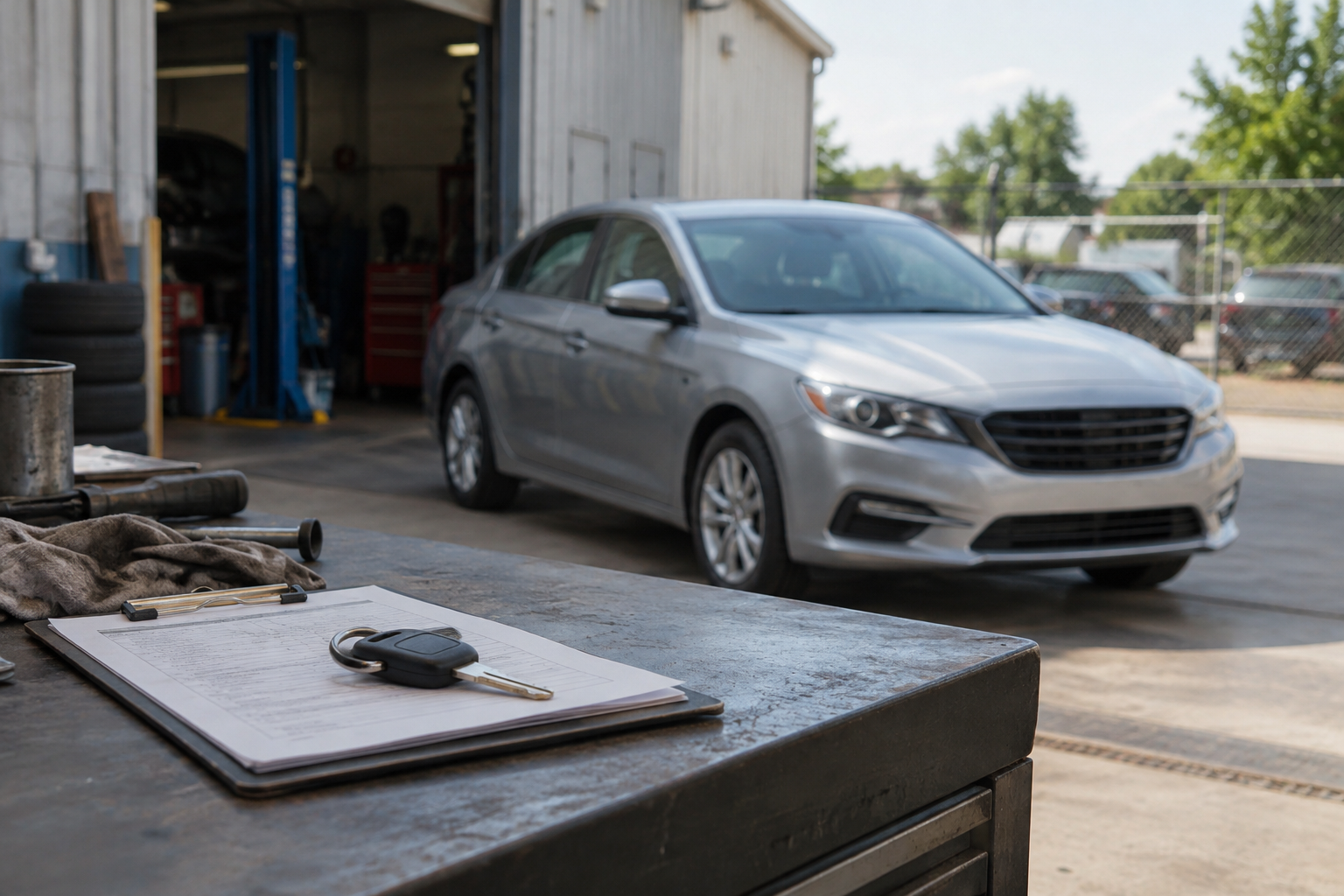
Your car is back from the repair shop, but getting it fixed may not restore everything you lost. A diminished value claim after car accident repairs seeks compensation for the market value your vehicle still lacks because of the crash. Whether you can recover that loss depends on state law, the responsible party, available coverage, and evidence—not simply the fact that an accident occurred.
Say you were stopped at a light and got rear-ended on your way to work. The shop replaces damaged parts, the car drives normally, and the repair bill gets paid. Later, a dealer offers less because the vehicle now has an accident history. That remaining difference is the issue this article addresses. For the broader insurance conversation, see our guide to dealing with an insurance adjuster; for timing concerns, review car accident filing deadlines.
What Is a Diminished Value Claim After a Car Accident?
Diminished value is a loss in a vehicle’s market value that remains after repairs. Repair costs pay to restore the vehicle’s condition; diminished value concerns what a buyer would pay for it afterward. These are related losses, but one does not automatically establish the other.
The Washington Office of the Insurance Commissioner explains that payment is not automatic: you need supporting documentation showing that the repaired vehicle’s market value decreased. Its guidance also notes that claims typically go to the at-fault party’s insurer, rather than your own. That guidance describes Washington’s insurance context; your state’s rules still need to be checked.
Three kinds of value loss
These terms help you understand what an appraiser or adjuster is discussing:
- Inherent diminished value: The car has been properly repaired, but its accident history makes it less desirable to buyers.
- Repair-related diminished value: Unresolved defects or inadequate repairs reduce the vehicle’s value.
- Immediate diminished value: The difference in value immediately after the collision, before repairs.
Kelley Blue Book’s explanation of diminished value distinguishes these categories. For many owners picking up a repaired car, inherent diminished value is the central question.
Keep repair problems separate from accident-history concerns. A door that no longer closes properly needs a documented inspection and a discussion about correcting the work. A properly functioning door does not resolve whether the car’s collision history affects its resale value. Identifying which problem you have helps you request the right evidence and avoid counting the same loss twice.
Can I File a Diminished Value Claim if the Accident Was Not My Fault?
You may be able to pursue diminished value from the responsible driver or their liability insurer, depending on state law and the circumstances. Being free of fault does not, by itself, prove a recoverable amount. You still need to establish responsibility and show an accident-related loss in value.
Start by asking the property-damage adjuster whether the insurer is reviewing diminished value separately from repairs. Request the claim number, submission instructions, and any written explanation of the insurer’s position. Do not assume an open repair claim means diminished value is already being evaluated.
Third-party claims versus your own coverage
A claim against another driver’s insurer is generally called a third-party claim. A claim under your own policy is a first-party claim. Different legal and contractual rules may apply to each.
An analysis published by the National Association of Insurance Commissioners describes differences among states in how diminished value is determined and paid, including distinctions between first-party and third-party claims. A policy that pays for collision repairs does not necessarily pay for the remaining loss in market value.
If the other driver has no insurance or insufficient insurance, ask whether your policy includes applicable uninsured or underinsured motorist property-damage coverage and whether it can cover this loss. Do not assume bodily-injury coverage pays for vehicle damage. Availability and terms vary.
When an insurer raises fault or coverage objections, separate those from a dispute over the amount. Ask whether it is denying responsibility, denying coverage, or disputing your valuation. If you were also injured, you can request a free case evaluation to discuss your broader accident situation with a participating attorney.
Which Vehicles and Accidents Support a Diminished Value Claim?
The strongest starting point is not “my car was in an accident.” It is “here is evidence that this particular accident reduced this particular car’s market value after repairs.” Vehicle condition, damage history, repair scope, and market comparisons all affect that assessment.
Consider these factors before paying for an appraisal:
- Pre-crash condition: Maintenance records and earlier photographs can help establish how the vehicle looked and was maintained.
- Age and mileage: Comparisons should reflect your car’s actual use, not a much newer or lower-mileage example.
- Damage severity: A structural repair presents different valuation questions from a superficial scrape.
- Prior accidents: Earlier damage may affect the starting value and complicate identifying the new loss.
- Model and configuration: Trim, options, and vehicle type should be matched as closely as practical.
None of these factors supplies a guaranteed result. An older vehicle is not automatically excluded, and a newer vehicle is not automatically entitled to payment. The question is what reliable evidence supports under the applicable rules.
Repaired vehicles versus total losses
Diminished value usually concerns a vehicle that remains in service after repairs. If the insurer declares your car a total loss, the dispute generally concerns the vehicle’s pre-loss valuation rather than a separate post-repair loss.
If total-loss status is unresolved, preserve the valuation report and damage records, but clarify which issue the insurer is deciding before commissioning a post-repair appraisal. Similarly, if repairs are incomplete, a final assessment may be premature. You can notify the insurer that you intend to pursue diminished value while gathering the documents needed to evaluate it.
How Do I Prove Diminished Value After a Car Accident?
Build a file that connects three things: the vehicle’s condition before the collision, what the collision damaged, and its market value after repairs. A repair invoice alone usually answers only part of that story. Organize your materials so someone unfamiliar with the crash can follow the evidence without guessing.
Establish the pre-accident baseline
Save the registration or ownership records, mileage near the crash date, maintenance history, and photographs taken before the accident. Include the precise year, make, model, trim, and relevant options. If the car had previous damage, disclose it and preserve any available repair records.
A general online valuation can provide context, but it is not a complete individualized appraisal. Save the inputs used to generate it, including mileage, condition, location, and valuation date. Otherwise, an adjuster may be unable to reproduce the estimate or may compare it with a number based on different assumptions.
Document the damage and completed repairs
Keep the original estimate, later supplements, final itemized invoice, and photographs from before and during repairs. Supplements matter because the first estimate may not show damage discovered after disassembly.
Ask the shop for records explaining significant repair work, including structural measurements or inspection results if those were part of the job. Do not ask a technician to make a valuation opinion outside their expertise. Their repair documentation can support a separate valuation professional’s analysis.
Show the remaining market effect
Useful support may include a reasoned appraisal, relevant market comparisons, and written dealer evaluations that explain an accident-history adjustment. A vehicle-history report can help document what buyers see, but the report itself does not assign a defensible dollar loss.
Keep emails and dated notes from valuation discussions. If a dealer says the accident affects its offer, ask whether it will explain that adjustment in writing. A specific explanation is more useful than a handwritten offer with no context about condition, reconditioning costs, or dealer margin.
Estimating Diminished Value Without Relying on a Calculator
The basic concept is straightforward: compare the vehicle’s supported pre-accident market value with its supported post-repair market value, isolating the loss attributable to the collision. The hard part is making the two values genuinely comparable.
For example, comparing a clean-history retail listing with a dealer’s trade-in offer for your repaired car mixes different pricing categories. Some of the gap may reflect dealer overhead or profit rather than accident history. Likewise, comparing values months apart may introduce ordinary depreciation or broader market changes.
Make your comparisons consistent
For each comparable vehicle or valuation, record:
- Whether the figure is an asking price, completed sale, purchase offer, or guide estimate.
- The date and geographic market.
- Mileage, trim, options, and condition.
- Known accident history and any relevant differences.
- The reason an adjustment was made for those differences.
You may not be able to obtain perfect comparisons. A credible appraisal should explain those limitations rather than hide them.
Ask what an insurer’s formula actually measures
Some insurers use formulas, including methods commonly called “17c,” to estimate diminished value. Kelley Blue Book describes how that approach applies caps and adjustments. A formula result is not automatically the legal measure of your loss, and a percentage used in a formula should not be treated as a universal legal ceiling.
Request the insurer’s calculation, starting value, mileage input, damage classification, and explanation of the method. Then identify concrete disagreements. “The report uses the wrong trim” is easier to evaluate than “the offer feels too low.”
An independent appraiser may be useful when the amount is meaningfully disputed. Before hiring one, ask about vehicle-valuation experience, methodology, report contents, fees, and whether the appraiser can explain the conclusions if challenged. Ask about fee reimbursement rather than assuming the insurer will pay it. An appraisal supports a claim; it does not guarantee acceptance.
Submitting a Diminished Value Claim With a Clear Evidence Packet
A useful submission is organized, specific, and easy to review. Start with a short cover letter identifying the accident date, claim number, vehicle, and the fact that you are requesting evaluation of diminished value separately from completed repairs.
State the amount you are requesting only if you have evidence supporting it. Explain the basis, identify the valuation date, and attach the supporting report or comparisons. If you are still collecting evidence, say so rather than presenting an unsupported number as final.
Give each attachment a clear purpose
Arrange the packet in a logical order:
- Vehicle identification and pre-accident condition records.
- Collision photographs and relevant damage documentation.
- Final repair invoice and supplements.
- Post-repair appraisal or other market evidence.
- A brief explanation connecting the evidence to the requested loss.
Keep a complete copy and use a submission method that provides a record of delivery. Ask the adjuster to confirm receipt, identify missing information, and explain the next review step. After a telephone conversation, send a brief written recap of what was discussed without guessing about anything you did not understand.
Separate other accident expenses
Diminished value is not a substitute for unpaid repairs, rental expenses, or injury-related losses. Give those items their own documentation so a valuation dispute does not blur the rest of your claim. Our article on who pays for a rental car after an accident addresses that separate expense.
If injuries make paperwork difficult, a trusted person can help organize records while you remain involved in decisions. A free accident case review can also help you discuss concerns about the larger claim with a participating attorney. Free Case Evals is a connection service, not a law firm.
Responding to a Diminished Value Denial or Low Offer
A denial is more useful when you know exactly what it means. Request the insurer’s explanation in writing and ask which documents, policy provisions, or legal grounds it relied on. A coverage denial calls for a different response than an appraisal disagreement.
Common issues to clarify include:
- “The repairs restored the car.” Ask whether the insurer separately evaluated any market loss from accident history.
- “The vehicle had prior damage.” Ask how that history was accounted for and whether the new collision caused an additional measurable loss.
- “Your comparisons are not comparable.” Request the specific differences and supply closer matches where available.
- “Our formula determines the amount.” Request the inputs and reasoning, then address factual errors individually.
- “Your policy excludes this loss.” Ask for the relevant policy language and clarify whether the decision concerns your own coverage or a third-party claim.
Avoid repeatedly submitting the same packet without addressing the stated objection. A focused response might correct mileage, add a missing repair supplement, or obtain an appraiser’s explanation of why a particular comparison was used.
If the dispute remains unresolved, ask about available review procedures. Your state insurance department may explain complaint options, though a complaint does not guarantee payment or resolve every valuation dispute. A licensed attorney can assess legal options, costs, and whether further pursuit makes practical sense. You can find a car accident lawyer by state when you need guidance tied to your location.
Diminished Value Deadlines, Releases, and Injury Claims
Do not wait until you sell the car to ask about deadlines. Insurance notice requirements and lawsuit filing deadlines are different, and the rules depend on the state and claim. An open insurance file is not a safe reason to assume every deadline is protected.
Record the collision date, the date you notified each insurer, repair completion, written decisions, and any deadlines stated in correspondence. If an insurer gives you a date, ask what it applies to: submitting records, accepting an offer, using a policy procedure, or filing a legal action. A licensed attorney should confirm the deadlines relevant to your situation.
Read settlement language before signing
A payment labeled “property damage” may come with a release that needs careful review. Check whether it addresses repairs only, all vehicle-related losses, or broader claims. Do not assume diminished value remains open because nobody discussed it during the repair process.
If you were injured, be especially cautious about language that appears to release all claims arising from the accident. Ask a licensed attorney to explain the scope before signing something you do not understand. Property damage and bodily injury involve different evidence, even when they arise from the same collision.
Protect your health while the vehicle claim proceeds. See a qualified medical provider for injury concerns rather than letting appraisal appointments or adjuster calls delay care. Keep medical and vehicle records in separate folders so each loss is supported clearly. Our car accident FAQ answers broader questions without replacing state-specific legal guidance.
Before Paying for a Diminished Value Appraisal
- Ask the insurer whether its dispute concerns coverage, responsibility, or the amount of loss.
- Confirm whether repairs are complete and obtain the final invoice before ordering a post-repair assessment.
- Request a written description of the appraiser’s methodology and report contents.
- Ask how prior damage, mileage, and local market conditions will be addressed.
- Get the fee and any charges for follow-up explanations in writing.
- Ask whether an inspection is included or whether the report relies only on documents.
- Confirm whether the insurer will consider appraisal costs; do not assume reimbursement.
- Verify relevant claim deadlines independently before waiting for a report.
Valuation Evidence Quality Check
| Evidence item | Check before using it | Gap to address |
|---|---|---|
| Online vehicle valuation | Correct trim, mileage, location, date, and condition | Save the inputs, not just the final number |
| Comparable listing | Similar equipment, condition, and pricing category | Explain meaningful differences and remember asking prices are not completed sales |
| Dealer purchase offer | Written date and vehicle identification | Ask whether accident history specifically reduced the offer |
| Appraisal report | Clear method and supporting market evidence | Request an explanation of unsupported adjustments |
| Repair invoice | Final version with supplements included | Obtain missing pages or descriptions of additional damage |
| Vehicle-history report | Accurate vehicle identification and accident entries | Document inaccuracies and ask the reporting service about correction procedures |
Questions to Bring to an Attorney Evaluation
- Does my state permit this type of diminished value recovery under these circumstances?
- Should the request go to the other driver’s insurer, my insurer, or another party?
- What deadlines apply, and does ongoing negotiation affect them?
- Does a release I received include diminished value or injury claims?
- Would an independent appraisal add useful evidence in this dispute?
- Can you assist with property damage as well as my injury claim, and how would fees apply?
- What practical options remain if the insurer disputes the appraisal?
- How should prior vehicle damage be disclosed and accounted for?
Request a Free Case Evaluation After an Injury Accident
If you were injured and are trying to manage repairs, diminished value, and insurance calls at once, you do not have to arrive at a case evaluation with every number settled. Bring the repair invoice, any valuation or denial, relevant insurance correspondence, and any release you have been asked to sign. Explain which issues remain unresolved.
Free Case Evals connects people injured in motor vehicle accidents with participating attorneys for a free case evaluation. Free Case Evals is not a law firm, and an evaluation does not guarantee representation or compensation. You can request your free case evaluation to discuss your accident and ask whether an attorney can assist with the injury claim and related property-damage concerns.
This article provides general educational information, not legal advice. Laws and coverage vary by state; speak with a licensed attorney about your circumstances.
Sources
- Automobile Diminished Value Claims
- Diminished Value of a Car: Estimations After an Accident
- Filing an auto insurance claim | Office of the Insurance Commissioner
Sources consulted 2026-10-24. This is not an attorney-review date.
Printable Checklists From This Article
Frequently Asked Questions
Do I have to sell my car to claim diminished value?
Not necessarily; a valuation may establish market loss without a completed sale. Whether that evidence is sufficient depends on the applicable rules and the quality of the documentation. Ask about deadlines now rather than waiting until you trade in the vehicle.
Can I claim diminished value on a financed car?
Having an outstanding loan does not measure the vehicle’s diminished value. Review ownership and lienholder requirements, and ask how any payment would be handled. The difference between your loan balance and the car’s value is not the same as accident-related diminished value.
Can I file a diminished value claim for a leased car?
A lease raises questions about who owns the loss and who may pursue it. Review your lease and contact the leasing company before commissioning an appraisal or accepting a settlement. A licensed attorney can help clarify your rights and obligations.
Does a clean vehicle-history report mean I have no diminished value claim?
A clean report does not replace an evaluation of the actual damage, repairs, and market evidence. The relevant question is whether you can prove a recoverable loss attributable to the accident. Do not treat the presence or absence of a report entry as a valuation by itself.
Is a certified appraisal required for diminished value?
Do not assume an appraisal with a particular certification is universally required. Evidence requirements vary, and some owners submit supporting records themselves. A qualified appraiser may help when the market loss is difficult to document or the insurer disputes your evidence.
Can I claim diminished value after a minor accident?
Minor damage does not establish a measurable post-repair loss on its own. You would need evidence showing how the collision affected the repaired vehicle’s market value. Consider the likely usefulness and cost of additional valuation work before commissioning it.
Will the insurance company automatically include diminished value in my repair payment?
Do not assume that a repair payment includes a separate diminished value evaluation. Ask the adjuster to identify what the payment covers and whether any remaining value loss is under review. Read accompanying settlement documents before accepting terms.
Can I reopen a settled property-damage claim for diminished value?
That depends on what was settled, the release language, applicable deadlines, and state law. Gather the payment correspondence and any documents you signed. Have a licensed attorney review them before assuming either that the claim is closed permanently or that you can reopen it.
This article is for general informational purposes only and is not legal or medical advice. Laws vary by state. Speak with a licensed attorney about your specific situation.
Hurt in a car accident?
Answer a few quick questions to see if you may qualify for a free case evaluation. No cost, no obligation.
Start My Free Case Evaluation