
Uber Passenger Accident Insurance: Prove Your Trip and Check Coverage
Free Case Evals · October 17, 2026
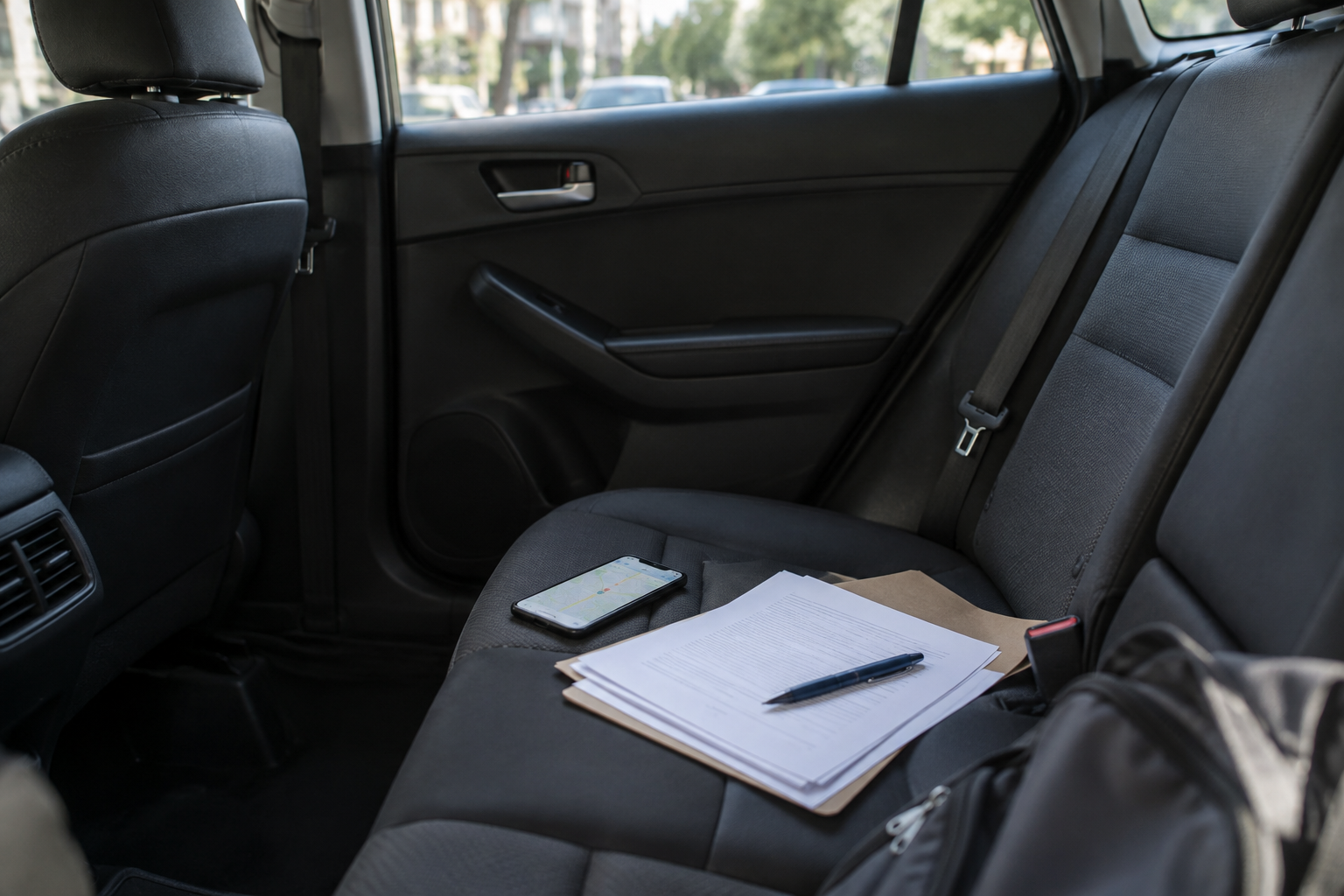
If you were injured during a booked Uber ride, uber accident passenger insurance coverage depends on the trip’s status when the crash happened, the applicable policy, state law, and who caused the collision. Insurance maintained for the ride may respond, but another driver’s liability coverage or available medical benefits may also matter. Save your receipt and supporting trip records, then ask the insurer to confirm which coverage applies to your injury claim.
You do not need to solve the insurance question from the roadside. Get somewhere safe, seek care from a qualified medical provider, and preserve what you can without delaying treatment. This guide focuses on proving your passenger status and finding the right insurance contact; our broader Uber and rideshare accident claims guide explains the overall process.
Before comparing coverage or an offer, separate your medical expenses, missed income, and other receipts. The car accident settlement calculator can illustrate those losses with pain-and-suffering assumptions, but it cannot identify which passenger policy pays or predict your recovery.
How Does Uber Passenger Insurance Change With Trip Status?
A rideshare vehicle can move through several insurance phases in one afternoon. The fact that the car has an Uber sticker—or that the driver regularly accepts rides—does not establish which phase applied at the moment of impact.
Uber’s official insurance page organizes its coverage information around the driver’s activity. For a booked passenger, distinguish these four situations:
| Driver’s status | What it means | What you need to establish |
|---|---|---|
| App offline | The driver is not available for rides through the app | Whether this was actually a booked platform ride or a personal trip |
| Online and waiting | The driver is available but has not accepted a request | Whether your request had been accepted before impact |
| Accepted and heading to pickup | The driver has accepted a ride but has not collected the passenger | Acceptance time, pickup location, and crash time |
| Carrying the passenger | The passenger is riding during the booked trip | Actual pickup, trip activity, and whether the ride had ended |
The accepted-trip phase and passenger-onboard phase should not automatically be treated as identical everywhere. State exceptions can make that distinction meaningful.
Say you are rear-ended at a light while traveling to work in your booked Uber. Your task is not to prove merely that you paid Uber that morning. You want records connecting you, that vehicle, and the active ride to the crash time and location.
A cancellation, early trip ending, or delayed pickup entry can create an apparent mismatch. Document what actually happened rather than changing your account to match the app. Ask the insurer which status it is using and what records support that decision.
What Uber and Lyft’s Official Insurance Pages Actually Tell You
Official platform pages are useful starting points, but a national overview is not a coverage determination for your crash. Check the official page when you investigate, then request the policy information applicable to the accident’s location, date, and ride type. Do not assume a current webpage describes an older accident’s policy.
Uber: separate passenger injury coverage from driver benefits
Uber’s insurance overview describes liability coverage for different stages of rideshare activity and explains that additional coverages depend on state law. Its discussion of optional injury protection concerns drivers; it should not be mistaken for a passenger medical-payment benefit.
Ask for the applicable insurance certificate and policy information, including relevant endorsements. Specifically ask whether liability, uninsured/underinsured motorist bodily injury coverage, personal injury protection, or medical payments coverage may apply. Their availability and terms are not uniform.
Lyft: read the state footnotes, not just the headline
Lyft’s official insurance page also distinguishes waiting for requests from rides in progress. Its published footnotes identify waiting-period exceptions for Arizona and Nebraska and en-route-to-pickup liability exceptions for Maryland and Arizona.
Those exceptions illustrate why “an accepted ride always has the same coverage as an occupied ride” is an unsafe assumption. If you are comparing Lyft and Uber, verify each platform independently rather than transferring one company’s terms to the other.
You do not need to memorize advertised limits. Instead, obtain written answers to three questions: Which policy applies? Which trip phase did the insurer assign? Which state-specific provisions affect your claim? A policy limit is a ceiling subject to policy terms, not a promised payment or a separate fund guaranteed to every passenger.
How Do I Prove My Uber Trip Was in Progress During the Accident?
Start with the receipt, but build a small evidence package around it. A receipt helps identify the ride; by itself, it may not resolve the exact crash time, whether you were already inside, or why the app recorded an unusual ending.
Save the receipt and trip identifier
Download or preserve the emailed receipt and available trip details. Capture the date, driver information, vehicle description, route, pickup and dropoff entries, and trip identifier if displayed. If you cannot locate a trip ID, ask platform support to identify it using the booking account and ride details.
Keep original emails and files alongside screenshots. A cropped image of the fare alone leaves out information the insurer may need to match the ride to its records. Save a separate copy somewhere accessible if your phone stops working.
Preserve screenshots that explain the timeline
If safely available, capture the ride screen, driver profile, arrival messages, route map, cancellation notices, and support conversation. Include visible timestamps when possible. Do not recreate a screen or edit an image to make the timing look clearer; explain uncertainty in a separate note.
A useful timeline might say: the driver arrived, you entered the rear seat, the car traveled several blocks, and the collision occurred before the destination. Use exact times only where a record supports them; otherwise label them approximate.
Connect pickup and dropoff records to what happened
Save messages about the meeting spot, pickup changes, stops, and the intended destination. Compare the recorded dropoff with the collision location. A ride ended beside the crash scene may need explanation because it was interrupted, not because you completed an ordinary trip.
Keep the police report number, scene photographs, and witness contacts with the trip materials. If the report omits your passenger status or identifies the wrong vehicle, ask the reporting agency about its correction or supplement process. These records support different facts; no single document must carry the entire account.
Missing Receipts, Canceled Rides, and Other Trip-Record Problems
An incomplete app record is a reason to gather supporting evidence—not a reason to assume there is no possible claim. Be precise about the gap when you contact support or an insurer.
Someone else booked the ride. Ask the booking account holder to preserve the receipt, trip screen, and messages. Record who booked and who actually rode. A payment record under another person’s name does not explain passenger identity without that connection.
The driver ended the ride before the crash. Write down when you noticed the ending and whether you remained in the vehicle. Preserve any message suggesting an early ending or continued travel. Do not assume either that coverage disappeared immediately or that it necessarily continued; the facts and applicable terms need review.
The ride shows canceled, but you were picked up. Save the cancellation notice and any messages, photographs, or witness information supporting the pickup. Ask support to preserve acceptance, arrival, start, cancellation, and end-event records for the identified trip.
Your phone was damaged. Look for emailed receipts and records accessible through your account. Ask another rider to preserve their own photographs and messages. Keep damaged-device documentation if it explains why a screenshot is unavailable.
The route or time looks wrong. Distinguish what you personally remember from what the app displays. Check whether records use different time zones before describing a discrepancy as an error.
Platform data may require further requests or legal assistance to obtain. If a trip-status disagreement is blocking progress, you can request a free review of your situation. Free Case Evals is not a law firm; it connects injured people with participating attorneys for a free case evaluation.
Who May Pay an Injured Uber Passenger’s Losses?
Proving the trip phase helps identify potential insurance. It does not, by itself, prove who caused the collision, establish every injury, or determine what payment is owed.
Liability insurance and fault
If the rideshare driver caused the crash, liability insurance applicable to that ride may be a source of recovery. If another motorist caused it, that motorist’s liability insurer may need to receive a claim. In a collision involving disputed or shared responsibility, more than one insurer may investigate.
For example, if another vehicle hits your Uber from behind, the active-trip receipt does not automatically make Uber’s liability coverage responsible for your losses. You still need the other driver’s details and evidence about the collision.
Uninsured drivers and medical benefits
Uninsured/underinsured motorist coverage may matter when a responsible driver has no insurance or insufficient insurance, but do not assume it is included for every ride. Ask whether coverage exists for your accident and whether it protects you as an occupant.
Personal injury protection, medical payments coverage, or your own applicable policies may also require review. As Justia’s rideshare accident overview explains, no-fault benefit priority differs by state. The policy that addresses medical bills first may not be the policy that ultimately resolves a liability claim.
Keep medical bills, treatment records, benefit explanations, receipts for related expenses, and documentation of missed work. Each serves a different purpose: a bill shows a charge, while employment records help support claimed income loss. For a closer look at payment sources, read our guide to medical bills for injured passengers.
Does Reporting an Uber Accident Automatically File an Insurance Claim?
Do not treat an app acknowledgment as proof that an insurer has opened your bodily injury claim. Accident reporting tells the platform what happened; an insurance claim requests benefits or compensation under an identified policy. A report may lead to a claim referral, but you should confirm that handoff.
Use the passenger support options associated with your trip to report the collision. Describe your role as a passenger, identify the ride, and provide a factual account. App labels and support paths can change, so follow the current available options rather than relying on instructions written for drivers.
Uber’s official page includes Driver app reporting instructions and a driver Crash Center. That does not mean an injured passenger will have the same interface. Lyft’s official page likewise directs crash reports to its claims support process. Neither a support ticket nor a driver’s report establishes that your individual injury claim is being handled.
After reporting, ask:
- Has my injury information been sent to an insurance company?
- What is the insurer’s name and official contact information?
- Is the number I received a platform support ticket or an insurance claim number?
- Who handles my bodily injury claim, rather than vehicle damage?
- What additional notice or paperwork does the insurer require from me?
Save the submission and confirmation. If support says an adjuster will contact you, record that response and follow up if contact does not occur. Do not assume the driver, another passenger, or the police completed your insurance notification.
When an adjuster responds, our guide to communicating with an insurance adjuster can help you prepare for the broader conversation.
Build an Insurer Contact Record That Prevents Claim Mix-Ups
You may hear from platform support, a claims administrator, the rideshare insurer, and another driver’s insurer. Keep separate entries for each organization. Similar-looking reference numbers do not necessarily refer to the same claim or cover the same losses.
For every contact, record the person’s name, organization, contact details, date, claim number, and stated responsibility. Confirm whether they handle passenger injuries, vehicle damage, medical benefits, or only the platform report. Ask them to explain unfamiliar terms rather than accepting a vague statement that “the claim is open.”
Your first coverage request can be simple: “I was an injured passenger on this booked ride. Please confirm the claim number, the trip phase you are using, and the insurance coverage you are investigating.” This asks for information without guessing about fault or policy terms.
If someone says another carrier must act first, ask for the reason in writing and the correct referral details. If coverage is denied, request the written decision identifying the factual and policy basis. A statement that the app was offline raises a different issue from a decision that the insured driver did not cause the crash.
Before sending medical or identity documents, confirm the recipient and secure submission method. Keep a copy of what you send and a dated record of delivery. If multiple insurers ask for the same material, track each submission separately.
You can connect with a participating attorney for a free evaluation if conflicting answers leave you unsure which insurer should be handling your passenger claim. Bring the actual correspondence, not just your recollection of the calls.
Protect Your Records While Coverage Is Being Investigated
An unresolved coverage question does not pause every deadline. State lawsuit deadlines, policy notice requirements, and deadlines for particular benefits can differ. Ask a licensed attorney about the rules that apply to your accident rather than waiting for the platform to finish its review.
Keep a dated follow-up list showing who owes you an answer and what remains missing. A practical file has separate folders for trip evidence, crash evidence, insurance correspondence, and losses. That organization helps you notice whether the real obstacle is missing trip data, a fault dispute, or incomplete medical documentation.
Seek appropriate medical care and describe the crash accurately to your provider. Preserve records as they arrive; you do not need to wait until treatment ends to organize them. Avoid estimating future expenses or reporting uncertain wage figures as confirmed losses.
Before signing a release or accepting a payment described as final, understand which claims it would resolve. A licensed attorney can explain the document in light of your state’s law and the available policies. Our car accident FAQ addresses common general questions, and you can find car accident lawyer information by state when looking for state-specific help.
Booked Passenger Trip-Record Preservation Checklist
- Save the full receipt as an original email or downloaded file; give the copy a filename containing the ride date.
- Capture the trip detail screen, including the trip identifier if available, driver, vehicle, and route.
- Save pickup messages and cancellation or ending notices without editing the originals.
- Write a separate chronology distinguishing recorded timestamps from approximate memories.
- Ask the booking account holder for records if someone else requested your ride.
- Preserve the platform report confirmation and label it separately from insurance claim correspondence.
- Back up the evidence somewhere other than the phone used during the ride.
- List missing records and ask support how to request or preserve them; retain its response.
Passenger Injury Insurer-Contact Worksheet
| Field to complete | Your entry | Verification step |
|---|---|---|
| Platform report reference | __________ | Confirm this is a support reference, not necessarily an insurance claim number |
| Insurance company and administrator | __________ | Ask which organization issued the policy and which handles the claim |
| Passenger bodily injury claim number | __________ | Confirm it includes your injury claim, not only vehicle damage |
| Adjuster name and verified contact | __________ | Confirm contact details through an official channel |
| Accident date, location, and trip ID | __________ | Compare with the receipt and your crash records |
| Trip phase assigned by insurer | __________ | Ask for the records supporting that classification |
| Applicable policy and coverage under review | __________ | Request relevant certificate, policy information, and state endorsements |
| Documents requested and delivery method | __________ | Keep copies and submission confirmations |
| Next action, responsible person, and follow-up date | __________ | Update after each substantive exchange |
| Written coverage decision received | __________ | Save the complete decision and any cited provisions |
Questions for a Passenger Coverage Evaluation
- Which records would best resolve the difference between my recollection and the app’s trip status?
- Should additional acceptance, pickup, cancellation, or trip-ending data be requested or preserved?
- Which potentially responsible drivers and insurance policies should be investigated?
- Do state-specific rules distinguish the accepted-trip phase from the passenger-onboard phase here?
- Are any no-fault, medical payments, or uninsured/underinsured motorist benefits potentially available to me?
- Which notice, benefit-application, and lawsuit deadlines should I confirm now?
- Does the insurer’s written explanation address coverage, fault, documentation, or more than one issue?
- What claims would a proposed release resolve, and could it affect other available coverage?
Request a Free Case Evaluation About Your Passenger Coverage
A useful evaluation starts with what you have: your trip receipt or booking details, the crash date and location, available medical records, and insurer messages. Missing documents do not prevent you from asking questions. Identify the gap so the reviewing attorney can discuss what may help establish your trip status or clarify coverage.
Request a free case evaluation through Free Case Evals, a free service that connects people injured in motor vehicle accidents with participating attorneys. Free Case Evals is not a law firm and does not determine insurance coverage or promise compensation.
This article provides general educational information, not legal advice. Laws and insurance terms vary by state; speak with a licensed attorney about your circumstances.
Sources
- Insurance for Rideshare and Delivery Drivers
- Insurance resources for Lyft drivers
- Uber and Lyft Accidents & Legal Options | Car Accidents Legal Center | Justia
Sources consulted 2026-10-17. This is not an attorney-review date.
Printable Checklists From This Article
Frequently Asked Questions
Can I make an Uber passenger injury claim if my ride was refunded?
A fare refund is not itself a decision about injury insurance coverage. Preserve the refund notice with the original ride records, and ask the insurer to evaluate the actual trip activity at the time of the crash.
Does my Uber receipt prove the driver caused the accident?
No. A receipt helps connect you to a booked ride, while fault requires separate evidence about how the collision occurred. Keep scene photographs, witness information, and the police report details as well.
What if the Uber driver asks me not to report the crash?
You can use the platform’s passenger support process and seek insurance information independently. Preserve any messages about the request and give a factual account of what happened without speculating about the driver’s motives.
Do all passengers in the same Uber share one injury claim?
Do not assume another passenger’s report opens a claim for you. Confirm that the insurer has your name and individual injury information; applicable per-accident limits may also affect multiple claims arising from one crash.
Will Uber’s vehicle damage deductible reduce my passenger injury payment?
The deductible described for contingent vehicle damage coverage addresses a different coverage from passenger bodily injury liability. Ask the insurer to identify the specific provision if it says a deductible affects your injury claim.
Can I rely on an insurance screenshot from an older Uber article?
Use it only as background, not as confirmation of your coverage. Request insurance information applicable to your accident date, state, and ride type because webpages, carriers, and policy terms can change.
What if I do not know the exact time my Uber crashed?
Label your recollection as approximate rather than guessing an exact minute. Trip messages, photographs, call records, and the police report may help narrow the timeline when reviewed together.
Does a free case evaluation mean Free Case Evals represents me?
No. Free Case Evals is not a law firm; it connects injured people with participating attorneys for a free evaluation. Discuss representation and any fee agreement directly with the attorney.
This article is for general informational purposes only and is not legal or medical advice. Laws vary by state. Speak with a licensed attorney about your specific situation.
Hurt in a car accident?
Answer a few quick questions to see if you may qualify for a free case evaluation. No cost, no obligation.
Start My Free Case Evaluation