
Who Is at Fault in a T-Bone Accident? Look Beyond the Impact
Free Case Evals · October 29, 2026
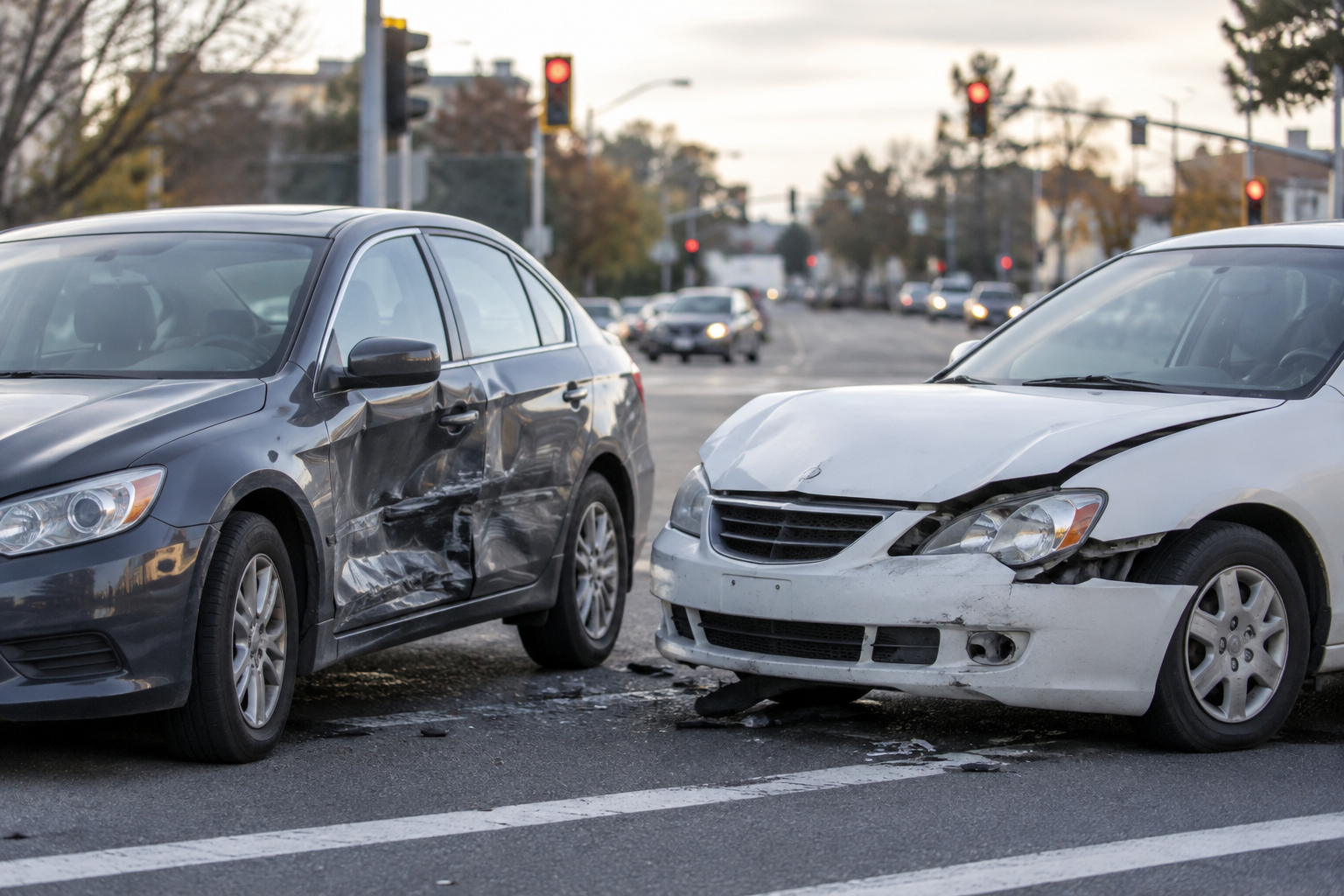
If you're searching “t-bone accident who is at fault,” the short answer is that responsibility usually turns on who violated the right of way or otherwise caused the collision—not which vehicle hit the other. Either driver, or sometimes both, may be responsible. A front bumper striking a passenger door tells you how the vehicles met, but not who had permission to enter the intersection.
That distinction matters when you're hurt, missing work, and hearing two different versions of the crash. Below, you'll find ways to organize intersection evidence, understand disputed fault, and document the losses connected to your injuries. This is general educational information, not legal advice; laws vary by state, and a licensed attorney can assess your circumstances.
Keep the evidence about responsibility separate from the records of your losses. You can use the car accident settlement calculator to illustrate medical costs, missed income, and pain-and-suffering assumptions, but it does not decide fault, apply your state’s negligence rules, or check whether insurance is available.
Who Is at Fault in a T-Bone Accident at an Intersection?
A T-bone crash happens when the front of one vehicle strikes the side of another, forming an approximate T shape. Investigators work backward from that impact to determine which driver's conduct caused it. As Progressive explains about side-impact fault, responsibility depends on state law and the specific circumstances, rather than the collision label alone.
Imagine you're driving straight through an intersection and another driver enters from your right. If that driver ignored a red light, their signal violation may establish responsibility. But if you entered against the red and crossed their lawful path, the fact that your door took the impact does not make you the innocent driver.
The investigation generally needs to answer three separate questions:
- What rule applied? Identify the signal, stop sign, turn restriction, or duty to yield governing each vehicle.
- What did each driver do? Establish direction, lane, movement, and timing before contact.
- How did that conduct contribute? Connect the mistake to the collision and the losses being claimed.
Avoid treating an accusation from the other driver as a settled finding. Ask what evidence supports it. If you are facing competing allegations, our guide to how partial fault affects car accident compensation explains the broader rules. For help deciding whether disputed evidence warrants professional assistance, read when to consider a car accident lawyer.
Common Intersection Scenarios That Change T-Bone Fault
Different intersection movements create different duties. Describe what each vehicle was doing instead of simply saying, “They T-boned me.” That more precise account helps an insurer or attorney identify the actual dispute.
Is the Driver Who Hits the Side of a Car Always at Fault?
No. A driver traveling straight may strike a car that unexpectedly crosses their path after running a stop sign. In that situation, the driver with side damage may have caused the collision. Conversely, a driver who runs a red light and strikes a vehicle lawfully crossing may be responsible despite having only front-end damage.
Left turns across oncoming traffic
A driver making an unprotected left turn generally must yield to oncoming traffic. If the turning vehicle crosses an approaching car's path, investigators will examine whether the turn was safe and permitted. They may also investigate whether the approaching driver was speeding or entered against a signal.
Preserve whether you remember a green arrow, a circular green light, or a flashing signal. Those are not interchangeable details. Our article on left-turn accident fault and right-of-way evidence addresses that specific conflict in greater depth.
Stop signs and vehicles entering the roadway
Stopping does not necessarily complete a driver's duty. A driver may stop and then pull into traffic without yielding. Write down where the vehicles approached from, which approaches had signs, and whether an obstruction affected visibility.
If a vehicle entered from a shopping center or driveway, photograph the entrance configuration when safe. A close-up of damaged doors will not show the sight lines or the path the entering driver took.
How Do You Prove Who Ran the Red Light in a T-Bone Accident?
When both drivers claim a green light, look for evidence independent of either account. Witness observations, video, signal information, and vehicle data can help reconstruct the sequence. No single source is guaranteed to exist or resolve the dispute.
Locate recordings before they disappear
Note nearby businesses, homes, buses, and vehicles that might have recorded the intersection. Record their locations and ask promptly whether relevant footage exists and can be preserved. Some cameras only monitor traffic and do not retain recordings; others may point away from the collision.
Keep original dashcam files, including the period before and after impact. A short clip beginning at the crash may omit the signal change or your approach. Do not edit the original or assume a social-media upload preserves its quality and associated information.
Separate observation from assumption
A useful witness might have seen your signal change, watched the other vehicle enter, or observed the entire approach. Someone who heard the impact and looked up afterward can describe the aftermath, but may not know who had the light.
Collect contact details without coaching witnesses. In your own notes, distinguish “I saw a green light” from “Traffic beside me started moving, so I believed it was green.” Accuracy is more useful than certainty you cannot support.
Understand technical evidence's limits
Signal timing records may explain how an intersection operates, but do not necessarily establish when a particular car entered. Vehicle electronic data may help evaluate speed or braking, depending on what was recorded and recoverable. Neither automatically identifies the light's color.
The discussion of T-bone claim evidence from We Win identifies video, traffic-light programming, witness statements, and electronic data as potential evidence sources. Ask an attorney which sources could actually resolve your disputed fact before assuming every technical investigation is necessary.
How Vehicle Damage and Police Reports Affect Fault
Damage helps establish contact points and vehicle positions. It may support an account that one vehicle crossed another's path or that contact occurred during a turn. But a crushed door cannot independently establish who had a green light.
If you can safely document the scene, capture both close-up damage and wider context:
- Each vehicle's position before it is moved, if possible.
- Lane markings, turn arrows, crosswalks, and nearby signs.
- Debris, visible roadway marks, and damaged roadside objects.
- Obstructions such as parked vehicles or vegetation.
- The intersection from each driver's approach, without entering traffic.
Safety comes first. Do not remain in a dangerous position to obtain a photograph. If the vehicles have already been moved, label your photographs accordingly rather than suggesting they show final resting positions.
Does a Police Report Decide Fault in a T-Bone Accident?
A police report can carry weight, but it is not automatically the final determination of civil liability. BANA LAW's side-impact discussion makes this distinction: the report may influence the investigation without settling the issue.
Obtain the report and review basic facts: travel directions, vehicle numbers, witness names, and the diagram. If it describes your vehicle as turning when you were traveling straight, ask the reporting agency about its correction or supplemental-information procedure. Keep supporting records and explain the specific discrepancy; disagreeing with an officer's conclusion is different from identifying a factual error.
Likewise, a citation may support a claim, but its significance depends on the circumstances and applicable law. No citation does not necessarily mean neither driver was negligent.
Shared Fault and Other Potentially Responsible Parties
An intersection crash does not always have one responsible driver. A driver might fail to yield while another driver's excessive speed contributes to the impact. Having the right of way does not make every action before the crash irrelevant.
An insurer alleging shared fault should be able to explain both the conduct it attributes to you and how that conduct contributed. Ask for that explanation in writing. “You should have avoided it” is a conclusion; the underlying question is what the evidence shows about visibility, timing, and available reaction time.
State rules determine how shared responsibility affects recovery. Comparative-fault systems may reduce compensation according to a person's responsibility, while some jurisdictions impose additional limits or use more restrictive rules. Do not apply another state's example to your claim or assume an insurer's proposed allocation is legally correct.
Other parties can also warrant investigation. As the Ben Crump overview of T-bone liability explains, a vehicle manufacturer or another driver outside the actual impact may sometimes share responsibility. That requires supporting facts, not just speculation.
For example, if a driver claims brake failure, preserve available information about the vehicle's condition and repairs. A mechanical claim needs investigation before anyone concludes that a defective part caused the crash. Similarly, document an unidentified vehicle's involvement if you actually observed it forcing a maneuver.
If you're unsure whether a blame allegation has substance, you can request a free case evaluation. Free Case Evals connects injured people with participating attorneys; it is not a law firm and does not decide fault.
Side-Impact Injuries and the Records Your Claim Needs
Side-impact collisions can cause serious injuries, including head injuries, fractures, neck or back injuries, and internal injuries. The severity varies with the circumstances. A qualified medical provider—not an insurance adjuster or an online description—should evaluate your condition and recommend care.
Prioritize your health rather than waiting for the fault investigation to finish. If you believe you have an emergency, seek emergency care. Otherwise, arrange an appropriate medical evaluation and describe what happened, where you were seated, and what you are experiencing without trying to diagnose yourself.
Document treatment and everyday limitations
Keep appointment records, discharge instructions, bills, and explanations of insurance payments. These documents serve different purposes: a bill shows a charge, while clinical records may explain the assessment and treatment. Save both rather than assuming one substitutes for the other.
A brief, factual journal can help you remember changes between appointments. Record specific limitations, such as difficulty sitting through your normal shift or needing help carrying groceries. Avoid copying generic symptom lists or exaggerating what happened.
Also preserve:
- Work restrictions issued by your provider.
- Dates of missed shifts and reduced hours.
- Receipts for injury-related expenses you intend to claim.
- Referrals and follow-up recommendations.
- Communications about scheduling or access problems.
If transportation, cost, or appointment availability interferes with treatment, tell your provider and document the obstacle. Do not silently abandon recommended follow-up or obtain treatment solely to increase a claim.
Be candid about prior injuries or similar symptoms. An accurate history allows your provider to evaluate your current condition and helps distinguish what changed after the crash. Concealing earlier problems can create avoidable disputes about otherwise legitimate records.
Who May Pay a T-Bone Accident Claim?
Fault and payment are related, but they are not the same question. Identifying a responsible driver does not establish available coverage or the amount owed. Policy terms, evidence of loss, and state law still matter.
The at-fault driver's liability insurance may cover injuries and property damage for which that driver is legally responsible, subject to coverage and limits. In no-fault systems, applicable personal injury protection coverage may pay certain injury-related benefits without first resolving blame. That does not mean every loss is covered or that fault becomes irrelevant to all claims.
Keep injury benefits and vehicle damage discussions separate. Ask each insurer what coverage it is considering, what documentation it requires, and whether it has accepted or disputed liability. Do not assume a payment toward one category resolves another.
Build the loss documentation before discussing value
There is no reliable settlement figure based only on the phrase “T-bone accident.” A claim involving brief treatment and no missed work differs from one involving ongoing care and substantial work restrictions. The evidence supporting each loss matters more than a collision label.
For medical losses, organize bills alongside payment records and treatment information. For lost income, preserve pay statements, employer confirmation, missed-work dates, and relevant medical restrictions. For vehicle damage, retain estimates, photographs, invoices, and communications about repair or total-loss decisions.
You can also record how injuries affect daily activities, using specific examples rather than assigning yourself a dollar amount. Ask a licensed attorney which losses may be recoverable under your state's rules. If the vehicle is repaired but you believe its market value remains lower, our article on documenting diminished value after a crash covers that distinct issue.
Handling a Disputed Side-Impact Insurance Claim
An adjuster may question the light sequence, argue that you could have avoided the crash, or request additional injury records. Respond to the actual issue instead of repeatedly sending every document you have. A clear, indexed submission makes the supporting evidence easier to evaluate.
For a signal dispute, identify the relevant recording or witness. For a wage dispute, provide records linking specific missed work to your injury. For a disagreement about vehicle positions, explain what the photographs show and when they were taken.
Keep your own account factual. You can say that you do not know the other driver's speed or cannot remember a detail. Guessing to fill a gap may create inconsistencies later. Preserve emails and letters, and maintain a call log with the date, person's name, and subjects discussed.
Ask what remains unresolved
If the insurer delays a decision or denies responsibility, request its reasoning and the outstanding information it wants. Ask whether the disagreement concerns fault, coverage, the connection between the crash and an injury, or the amount of a loss. These are different problems requiring different responses.
Before signing a settlement release, understand which claims it closes and whether unresolved treatment or losses remain. A licensed attorney can explain the proposed document; do not assume a payment described as routine has no effect on other claims.
Timing also deserves attention. Filing deadlines vary by state and circumstances, and evidence may disappear long before a lawsuit deadline arrives. Do not assume an open claim or ongoing negotiations preserve every deadline. For broader questions, consult the car accident FAQ, or use the directory to find a car accident lawyer by state.
Intersection Evidence Preservation Checklist
- Save original dashcam files in a separate backup location without editing them.
- Write down nearby camera locations and the direction each camera appeared to face.
- Record the intersection name, approximate crash time, and your direction of travel.
- Label photographs as taken before or after vehicles were moved.
- Store witness contact information separately from your notes about what each person observed.
- Ask an attorney whether vehicle inspection or electronic-data preservation is needed before repairs or disposal.
- Keep a dated record of requests to preserve recordings and any responses.
Match Each Intersection Dispute to a Useful Record
| Disputed point | Potential record | Where to look | Limitation |
|---|---|---|---|
| Which approach had the green light | Original video showing the relevant signal | Dashcam owner or nearby property owner | A camera may not capture the signal facing either driver |
| Whether a driver turned across traffic | Approach footage and scene diagram | Video owner and crash report | A diagram may reflect statements rather than direct observation |
| Whether speed contributed | Available vehicle data or reconstruction | Vehicle examination arranged through qualified professionals | Data availability and interpretation vary |
| Whether work was missed because of injuries | Employer attendance records and provider restrictions | Employer and treating provider | Wage records alone may not explain why work was missed |
| Whether the report lists the wrong travel direction | Photographs, video, or witness information | Your files and identified witnesses | Corrections follow the reporting agency's procedures |
Questions to Bring to a Side-Impact Case Evaluation
- Which specific right-of-way rule applies to the movements described in my crash?
- What evidence could distinguish my account from the other driver's account?
- Should anyone send preservation requests for footage, vehicle data, or the vehicles themselves?
- How does this state's shared-fault rule affect the allegations against me?
- Which available insurance coverages should be reviewed for injury and property losses?
- What filing, notice, or policy deadlines need to be checked now?
- What additional documents would help explain my missed work or ongoing treatment?
- Does a proposed release affect only vehicle damage or also my injury claim?
Request a Free Evaluation of Your T-Bone Accident Claim
You do not need a completed reconstruction or agreement from the other driver before asking about your options. Gather what you already have: the crash date and location, report number, photographs, insurance correspondence, and a short description of treatment and missed work. Clearly identify what remains uncertain, such as a missing witness or disputed signal.
During an evaluation, ask which evidence could change the fault assessment, what deadlines need checking, and what records would help document your losses. Those focused questions can make the conversation useful even when the investigation is still developing.
Free Case Evals is a free service that connects people injured in motor vehicle accidents with participating attorneys for a free case evaluation. It is not a law firm and does not provide legal advice. You can get a free case evaluation to discuss your circumstances with a participating attorney. An evaluation does not guarantee representation, compensation, or a particular outcome.
Sources
- Who's at Fault in a T-Bone Accident? | Car Accidents | Ben Crump
- Who Is at Fault in Side-impact Collisions? | Progressive
- T-Bone Accident Settlement Averages
- Side-Impact Collision Lawyer in Los Angeles
Sources consulted 2026-10-29. This is not an attorney-review date.
Printable Checklists From This Article
Frequently Asked Questions
Can I bring a T-bone accident claim if I was a passenger?
A passenger may have a claim against a driver or another party whose conduct caused their injuries. Which parties and insurance policies apply depends on the evidence and state law, so ask a licensed attorney to review both vehicles' involvement.
What if no one witnessed my T-bone accident?
A lack of witnesses does not automatically defeat a claim. Photographs, recordings, vehicle evidence, and the drivers' accounts may still help establish what happened, although some disputes remain difficult to resolve.
Does being hit on the driver's side prove I had the right of way?
No. The impact location helps explain how the vehicles contacted each other, but it does not establish the signal or yielding rule that applied before impact.
Can I dispute an insurer's T-bone fault decision?
You can ask for the factual basis of the decision and provide evidence addressing specific errors or omissions. A licensed attorney can assess whether the allocation is supported and explain available options under your state's law.
What if the other driver says the traffic light malfunctioned?
A claimed malfunction needs evidence, such as relevant video or available signal records. Record exactly what you observed rather than adopting the other driver's explanation, and ask an attorney whether further investigation is warranted.
Does a totaled car mean my T-bone injury settlement will be larger?
A total-loss decision concerns the vehicle and does not independently establish the severity or value of an injury claim. Injury compensation depends on documented harm, responsibility, available coverage, and applicable law.
Should I wait for the police investigation before requesting a case evaluation?
You can request an evaluation while an investigation is pending. Bring the information you have and identify what is missing so an attorney can discuss evidence preservation and deadlines without assuming the report is complete.
Can both drivers' insurance companies disagree about T-bone fault?
Yes. Insurers may interpret the evidence differently or have different information available. Their disagreement is not itself a final court determination, and additional evidence may help clarify the disputed issues.
This article is for general informational purposes only and is not legal or medical advice. Laws vary by state. Speak with a licensed attorney about your specific situation.
Hurt in a car accident?
Answer a few quick questions to see if you may qualify for a free case evaluation. No cost, no obligation.
Start My Free Case Evaluation